






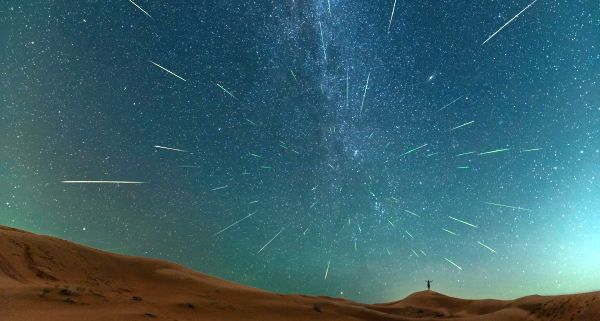
2025 Perseid Meteor Shower will peak on the night of August 12
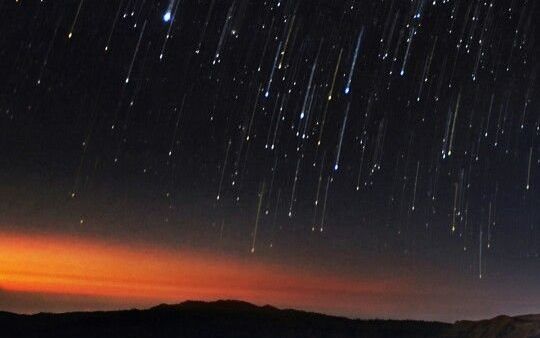
It’s that awe-inspiring time of year again and the annual Perseid meteor shower, already upon us, will reach its peak on the nights of August 12 and 13 – although skywatchers hoping for a summer spectacular may be left disappointed because of another sky object, the Moon.
It is always more favorable to try to spot meteors when our lunar satellite is below the horizon or when it is in its crescent phase, but this year’s Perseids peak falls three days following a Full Moon, so the brightness may prevent fainter meteors from being visible.
A waning gibbous Moon will brighten the skies as it rises on the nights of Aug. 12 – 13, when Perseids are most active this year. Skywatchers in the Northern hemisphere could see fewer than half the number of meteors usually seen on a dark summer night during the shower’s peak.
“The average person under dark skies could see somewhere between 40 and 50 Perseids per hour,” said Bill Cooke, lead for NASA’s Meteoroid Environments Office. “Instead, you’re probably going to see 10 to 20 per hour or fewer, and that’s because we have a bright Moon in the sky washing out the fainter meteors.” ~ NASA
The 2025 Perseid meteor shower is active between July 17 through August 24, but peaks on Tuesday night into Wednesday. The shower, which is usually one of the most spectacular of the year, is best viewed from the northern hemisphere and will be visible all over the UK, if skies are clear. The ideal time to see it is between midnight and 5.30 a.m., according to the Royal Astronomical Society.
When conditions are good and there are no clouds, observers can expect to see up to 50 meteors per hour, although that is unlikely this year because of the phase of the Moon.
Those hoping for darker skies should consider trying to see the Perseids on nights between August 16 – 24, although meteor activity will be lower.
Meteors (also known as ‘shooting stars’) are small particles of dust, some as small as grains of sand, entering our atmosphere at high speed. The friction as they pass through causes the air around the meteor to heat up dramatically, resulting in a characteristic brief bright streak of light.
Meteor showers occur when the Earth passes through a clump of debris in space, as our planet moves along its orbit around the Sun. The dust causing the Perseids comes from a comet known as Swift-Tuttle, which last passed near Earth in 1992 and orbits the Sun approximately once every 133 years.
Unlike a lot of celestial events, meteor showers are easy to watch and no special equipment is needed, although a reclining chair and a blanket make viewing more comfortable.
Most importantly, it would help to be away from artificial light, so observers are advised to avoid built-up areas if possible, and to try to find an unobstructed view of the sky.
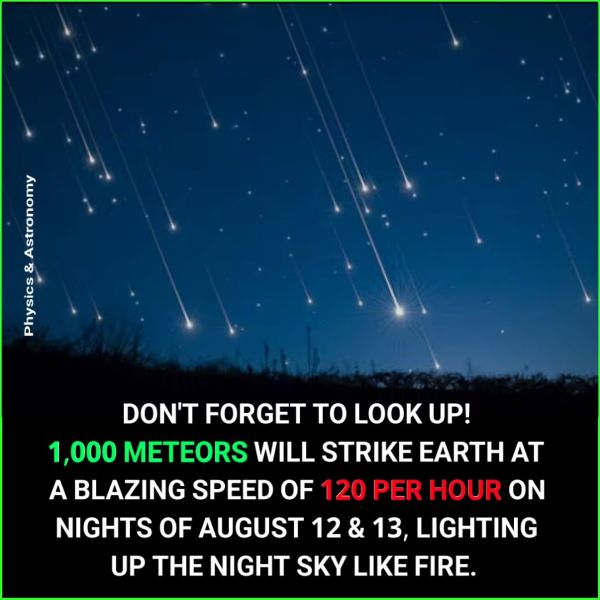
Though Perseids show up throughout the nighttime hours, the best chance to see them will be between midnight and dawn – or, even more specifically, 2 and 3 a.m. local time.
When you do venture out, aim for a safe, rural spot with a wide view of the sky. If you can see plenty of stars, chances are, you’ll see Perseids – but remember Cooke’s other piece of advice: “Look anywhere but at the Moon.” ~ NASA
If clouds or the Moon do make viewing impossible on the peak night itself, the shower will continue on subsequent nights, but with likely reduced activity.
Happy star gazing Earthlings!
.
(Source: Royal Astronomical Society)
Posted by Richard Webster, Ace News Today
Follow Richard on Facebook, Twitter & Instagram