




New research reveals the Top 10 U.S. States for Legal Cannabis Cultivation
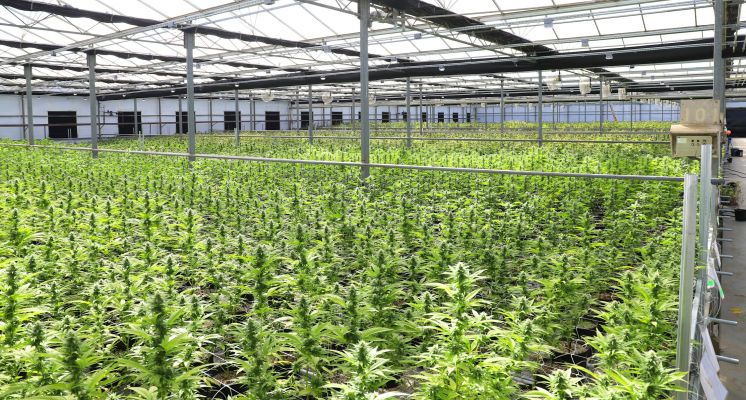
All the different new laws taking place in different states across the U.S. regarding the decriminalization or the outright legalization of possessing marijuana has had a direct impact on how businesses in those states that grow the popular herb are multiplying– and which states fall into the “Top 10 of Weed Producing States.” Spoiler alert: Louisiana has emerged as America’s pot-growing paradise, according to a revealing new study. Turns out, that southern state’s ideal climate conditions and relatively progressive cultivation laws create optimal growing conditions.
The research, carried out by experts at Green Unicorn Farms analyzed 15 key factors, including climate conditions, legal environment, land costs, and environmental quality, across the U.S. to determine which states offer the best conditions for cannabis cultivation.
- Southern states dominate the list, with seven of the top ten states for weed cultivation.
- Temperature and humidity balance proves critical, with top states averaging within 10 degrees of the optimal growth range (65-80°F).
~
Louisiana revealed as America’s weed-growing paradise in new study
Louisiana takes the top spot, with a whopping 64.81 points out of 100. The Bayou State has near-perfect growing temperatures averaging 67.96°F – just 4.54 degrees from the ideal cannabis growing temperature (72.5°F on average). The state also has spot-on humidity levels of 74% and abundant rainfall (60.7 inches annually), meaning excellent conditions for marijuana plants to flourish without much human help.
Louisiana also has relatively affordable agricultural land at $104 per acre. However, the state received a moderate cultivation legality score of 5 out of 10 in terms of weed cultivation legality, which means growing pot is allowed under strict conditions (e.g., medical use with limits on the number of plants). Still, the lower cultivation legality score wasn’t enough to drag down Louisiana’s overall ranking.
.
The 10 best states for weed growth in the U.S.
| Rank | State | Overall Score |
| 1 | Louisiana | 64.81 |
| 2 | Connecticut | 60.89 |
| 3 | West Virginia | 60.58 |
| 4 | New Jersey | 59.71 |
| 5 | Alabama | 58.68 |
| 6 | Rhode Island | 58.66 |
| 7 | Virginia | 58.59 |
| 8 | Maryland | 57.90 |
| 9 | South Carolina | 57.78 |
| 10 | Massachusetts | 57.28 |
Connecticut places second, with a score of 60.89, despite having cooler temperatures of 51.29°F. The northeastern state benefits from excellent sunlight conditions, receiving 372.18 average sunlight hours per month, among the highest in the nation.
Considering that marijuana plants are well suited to a high CO2 density environment, Connecticut’s relatively high CO2 emissions per state area (251.81 per 100,000 km2) help it rank among the best states for cannabis cultivation.
West Virginia scores 60.58 overall, securing third place with balanced growing conditions. The Mountain State features the best air quality in the nation, with an index of just 2.5, significantly better than most states.
With moderate cultivation legality (4.5 out of 10) and affordable land at $47 per acre, West Virginia offers good value for potential growers – it also benefits from favorable humidity levels (69.70%) and adequate rainfall (45.41 inches annually).
New Jersey takes fourth place, with a score of 59.71. The Garden State has a good growing season with 208 frost-free days annually and receives moderate rainfall (46.38 inches). Despite restrictive cultivation laws (2 out of 10), New Jersey’s mild climate and reasonable land costs at $86 per acre help secure its high ranking.
Coming in fifth is Alabama, with a score of 58.68. The state enjoys temperatures close to the ideal range at 64.36°F and receives plentiful rainfall (59.51 inches yearly). The state also benefits from a long growing season, with 233.5 frost-free days. However, farmers must refrain from growing weed just yet, as Alabama scores just 1 out of 10 for cultivation legality, which means it’s illegal in all cases.
Rhode Island places sixth overall with a score of 58.66. The state overcomes its chilly climate (averaging 52.03°F) with excellent humidity levels of 71.4%, tons of sunshine (372.19 hours monthly), and better-than-average air quality (19.80).
Virginia secured seventh place with a score of 58.59,featuring balanced temperatures (56.80°F) and humidity levels (68.70%). Its 213.75 frost-free days provide a reasonable growing season, but the state’s cultivation legality score is 3.9 out of 10 (illegal in all cases).
Maryland follows closely, with a score of 57.90. The Old Line State has relatively favorable cultivation laws, scoring 5.5 out of 10, among the best in the top 10. Maryland enjoys a good growing season with 215.33 frost-free days and a moderate temperature of 56.46°F, though its land costs run higher at $132 per acre.
South Carolina landed ninth, with 57.78 points, driven by warm weather (63.84°F average), high humidity (69.10%), 231 frost-free days and 50.97 inches of yearly rainfall. Despite the good natural conditions, the Palmetto State scored 1 in cultivation legality, meaning those interested in growing weed there will have to wait a while longer.
Massachusetts rounds out the top 10 with a score of 57.28. The Bay State stands out with the most favorable cultivation laws among the top 10 states, scoring an impressive 7.5 out of 10, which means cultivation is allowed for recreational use, but with some limits, such as for personal use only, with a plant count cap.
Massachusetts also enjoys good sunlight exposure (372.26 hours monthly), though its cooler temperatures of 50.46°F and moderate land costs of $118 per acre prevent it from ranking higher.
.
The five worst states for weed growth in the U.S.
| Rank | State | Overall Score |
| 1 | Nevada | 32.17 |
| 2 | North Dakota | 33.45 |
| 3 | Iowa | 34.88 |
| 4 | Idaho | 35.66 |
| 5 | Alaska | 35.96 |
On the other hand, several states present significant challenges for cannabis cultivation. Among them is Nevada, the least favorable state in the U.S. for growing cannabis, with a score of just 32.17. The state receives the least rainfall among all ranked states, at just 9.17 inches annually. Combined with its extremely low humidity (38.30%), these natural limitations make successful cultivation highly difficult without substantial artificial inputs and environmental controls.
North Dakota claimed the second-to-last position with a score of 33.45, primarily due to its cold climate and short growing season. The state averages just 41.71°F annually and offers only 132 frost-free days per year.
Iowa comes next, with a score of 34.88. The Hawkeye State has very restrictive cultivation laws (illegal in all cases) and the second-highest land costs among all states at $276 per acre. Its cooler temperatures (49.23°F), combined with limited frost-free days (156.75), create a challenging environment for cannabis growth.
Idaho placed fourth from bottom, with 35.66 points. The state’s 132.5 frost-free days and modest rainfall (21.88 inches), combined with its cold temperatures (44.14°F average) and restrictive cultivation laws (illegal in all cases), further limit growing potential.
Alaska rounded out the bottom five with 35.96 points. The Last Frontier’s freezing average temperature of 27.78°F – a whopping 44.72 degrees below the optimal temperature – makes outdoor growing virtually impossible. With just 116 frost-free days yearly, Alaska’s growing season barely exists.

.
Robert Hising, co-founder of Green Unicorn Farms, commented on the findings, “What might surprise people is that legal status isn’t the only factor determining a state’s suitability for cannabis cultivation. Natural growing conditions play an equally important role, which is why states like Louisiana and Alabama rank so highly despite not having the most progressive cannabis laws.
“The states that rank highest typically have temperatures between 50-70°F and humidity levels around 70%, which creates the perfect balance for healthy plant development.
“Interestingly, we noticed that states with relaxed cultivation laws don’t always offer the best natural environments, and vice versa. Massachusetts, for instance, has less restricted cultivation laws, but its cooler climate creates challenges that Louisiana simply doesn’t face. South Carolina, on the other hand, has great natural conditions for cannabis cultivation, but its stricter laws means cultivation is not yet possible in the state.
“Finding that balance between legal protection and ideal growing conditions is crucial for serious growers. Those living in states with worse natural conditions can still achieve good results through indoor cultivation that controls environmental factors, but those in naturally favorable regions have a significant advantage when it comes to cost-effectiveness and sustainability.”
For more on the revolution in cannabis and federally legal hemp products that “help you feel balanced, calm and happy for 24 hours of the day,” visit the Green Unicorn Farms website.

.
Sources for the Green Unicorn Farms research study:
- NORML
- National Centers for Environmental Information
- World Population Review
- Time and Date
Farmers Almanach - National Agricultural Statistics Service
- IQAir
- U.S. Energy Information Administration
Methodology:
1. A total of nine actors were used to compile the index. The raw data for each factor was cleaned, checked, and standardized on the same scale from 0 to 10, where 0 and 10 represent the worst and best values present in the data, to allow for accurate comparison between factors. Factors for which a high score would be negative were subtracted from 10 to invert their scoring.
2. The state laws on possession and cultivation of marijuana were ranked by ChatGPT, and the scores of each were averaged to provide an overall ‘Legality Score’.
3. A weighting was then assigned to each factor reflecting its importance within the analysis. The total score for the factors was then calculated, producing an overall index score out of 100 for each entry, upon which the final ranking is based.
.
Posted by Richard Webster, Ace News Today
Follow Richard on Facebook, Twitter & Instagram