






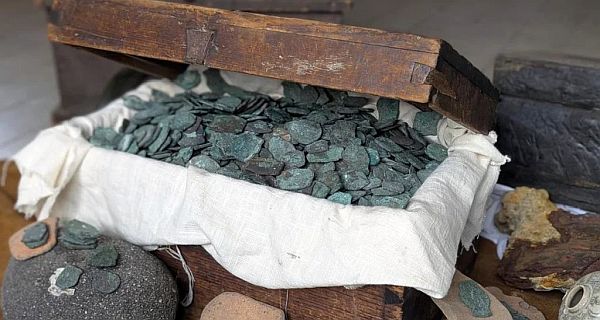
Undersea fortune: $1 million in coins recovered from 1715 Spanish shipwreck off Florida coast
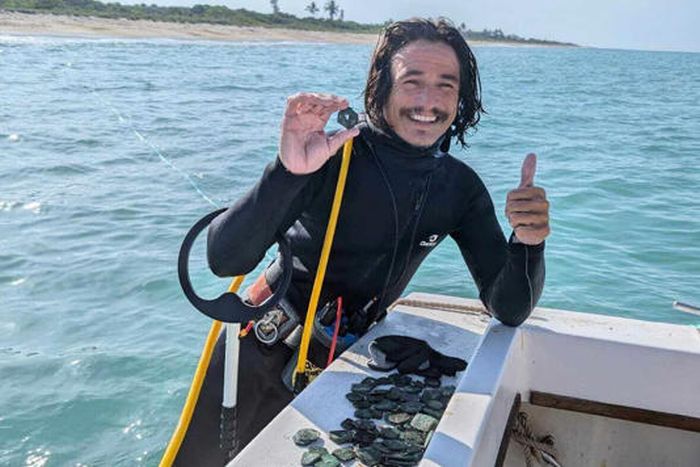
In a discovery that feels plucked from a treasure‑hunts novel, divers this week announced the recovery of more than 1,000 Spanish gold and silver coins, valued at roughly $1 million, from a centuries‑old wreck off Florida’s “Treasure Coast,” a span of Forida’s Southeast coastline running from Sebastian to the north, to the Palm Beaches in the south.
On Sept. 30, 1715 Fleet-Queens Jewels LLC announced that over 1,000 silver coins known as “reales” were recovered by Captain Levin Shavers and the crew of M/V (motor vessel) “Just Right” off the southeast region of Florida, widely known as Treasure Coast. Five gold coins called “escudos” were also recovered in a separate find. ~ USA Today
The Wreck: The 1715 Spanish Fleet: The newly found coins are believed to come from the fabled 1715 Spanish Treasure Fleet — eleven (sometimes twelve) Spanish galleons laden with New World gold, silver, and other valuables which sank off the Florida Atlantic coast during a hurricane on July 31, 1715.
Over the centuries, salvage operations and treasure hunters have retrieved vast quantities of material from the same zone, giving the region its nickname, “Treasure Coast.” Though the 1715 fleet has been a focus of marine archaeologists and investors for decades, new finds like this remind us that even well‑worked wrecks and portions of the sea may still harbor surprises.
~
What Was Recovered: According to the salvage firm 1715 Fleet – Queens Jewels, LLC, the haul included:
- Over 1,000 silver coins (commonly “reales”)
- Five gold coins (“escudos”)
~
Additional gold artifacts and fragments: Many coins are still legible, showing dates and mint markings — useful for historians tracing coin circulation and colonial mints in Mexico, Peru, and Bolivia. Salvagers suggest that the coins may have originated from a single chest or shipment that was jolted open when the ship broke apart in the hurricane.
~
Legal & Historical Dimensions: Recovering underwater treasure in U.S. waters is rarely a simple matter of “finding and keeping.” In Florida, artifacts discovered within state waters are considered the property of the State; but licensed and permitted recovery teams can negotiate a share or keep a portion under strict rules.
Typically, about 20% of recovered artifacts are allocated to state agencies for museum display and research. The salvage company must meticulously document, conserve, and report every find under federal and state permits.
Moreover, past controversies warn of the risks: in 2023–24, Florida authorities recovered 37 gold coins from the same 1715 wreck site that had been stealthily sold by contracted salvage operators. The incident led to investigations and raised tough questions about oversight and safeguarding cultural heritage.
~
Why This Discovery Matters
Historical & Numismatic Value: Coins bearing readable mint marks or rare dates help historians reconstruct trade routes, colonial coinage systems, and economic links between Spain and its American colonies. Because these coins survived underwater for centuries, they offer insights into preservation, corrosion, and maritime archaeology techniques.
Cultural Heritage & Public Access: Provided the find is vetted and conserved, portions should eventually go to public display in Florida museums, enriching community ties to the state’s colonial history.
Renewed Attention on Wreck Zones: The find reminds both professionals and amateurs that even in well‑searched waters like the Treasure Coast, significant discoveries are still possible — as long as they comply with strict permitting, documentation, and legal frameworks.
Ethical & Regulatory Precedent: Given past thefts and legal disputes over 1715 fleet recoveries, this discovery will likely test the balance between incentivizing private salvage efforts and ensuring that archaeological and heritage values are preserved and protected.
~
What’s Next? The salvage company must complete conservation, documentation, and legal adjudication of the find before any division of treasure takes place. Many coins will be cleaned, studied, catalogued, and possibly displayed. Meanwhile, authorities and preservationists will likely scrutinize the operation to ensure transparency and adherence to historic preservation rules.
In a way, this discovery continues a centuries‑long story — of colonial ambition, sea storms, shipwrecks, and the modern quest to recover and interpret the tangible legacy of the past. For more on this exciting and historic discovery of sunken treasure, see the video accompanying this article.
~
(Cover photo: Image credit: X)
Additional Sources:
- Associated Press / AP News, “Excavators find $1 million in gold coins from Spanish shipwreck along Florida’s ‘Treasure Coast’”
- NBC News, “$1M in gold and silver coins recovered from 1715 Spanish shipwreck off Florida”
- The Washington Post, “Excavators find $1M in gold coins from Spanish shipwreck along Florida’s ‘Treasure Coast’”
~
Posted by Richard Webster, Ace News Today
Follow Richard on Facebook, Twitter & Instagram