





Environmental policy shifts highlight safety and conservation rollbacks in America

Environmental conditions in America are being marked by significant regulatory changes and environmental battles across the United States, reshaping our climate and conservation landscape. From controversial pesticide approvals to the expansion of oil drilling in the Arctic, the Trump administration’s influence continues to stir intense debates within both political and environmental circles.
This regulatory push comes at a time when climate change-driven weather extremes are escalating, further challenging policymakers to balance economic interests with environmental protection.
Regulatory & Policy Shifts
EPA Re-approves Dicamba: The Environmental Protection Agency (EPA) has re-authorized the use of the herbicide dicamba on genetically modified soybeans and cotton, a move that has raised alarms from environmentalists and public health groups alike. Dicamba has been at the center of numerous lawsuits in recent years due to its propensity for drifting onto neighboring crops, causing widespread destruction, according to AP News.
Activists, including the influential Make America Healthy Again (MAHA) movement, argue that this decision undermines efforts to protect ecosystems and food security. The MAHA movement, which initially focused on reforming health and food policies, has now become a vocal critic of environmental rules under the Trump administration.
~
MAHA’s Growing Environmental Push: Originally formed to address public health issues, the Make America Healthy Again movement has evolved into a significant force pushing for changes to the Trump administration’s environmental policies. The group’s increasing involvement in regulatory matters signals a broader shift within conservative ranks toward prioritizing sustainable environmental practices. However, this push has not been without internal conflict, as factions within the movement debate how far to push the administration on climate issues.
While MAHA is influencing the EPA, the movement has also steered federal and state lawmakers away from enacting liability shields that protect pesticide manufacturers from expensive lawsuits. In Congress, after MAHA activists lobbied against such protections in a funding bill, they were removed, according to The Morning Times.
~
Arctic Drilling Push: A major environmental flashpoint has emerged with the Trump administration’s decision to open up 1.5 million acres of the Arctic National Wildlife Refuge (ANWR) for oil and gas leasing, according to EOS.org. This decision has drawn widespread condemnation from conservationists, environmentalists, and Indigenous groups who argue that drilling in this pristine wilderness will have irreversible consequences on local wildlife and ecosystems.
The controversial move has intensified the battle over America’s future energy strategy and environmental stewardship, with critics claiming it is a step backward in the fight against climate change.
~
The Renewable Energy “Blockade”: Currently, more than 60 large wind and solar projects slated for public lands are being stymied by the Trump administration’s efforts to outright halt or delay once-routine federal approvals, according to The Center for Western Priorities. Federal agencies under Trump have been accused of deliberately delaying the approval of hundreds of wind and solar projects, despite the growing demand for clean energy and rising concerns over electricity shortages. This initiative is driven by a broader policy to favor fossil fuel production and address perceived national security risks related to radar interference, even as electricity demand rises.
While the need for renewable energy has never been more urgent, delays in permitting are creating roadblocks for projects that could help meet ambitious climate goals. Renewable energy advocates argue that these delays are an intentional attempt to hinder progress toward a sustainable energy future, and that federal regulatory policies are playing a key role in stifling the growth of the sector.
A key example of the Renewable Energy Blockade is the Jackalope Wind Project in Wyoming, where a significant wind farm project ntended to span an area the size of Chicago and generate clean energy by 2027 was stalled by the Interior Department in early 2026.
~
As these regulatory shifts unfold, America is also grappling with climate-driven weather extremes. Record-breaking temperatures, severe flooding, and devastating wildfires have become more frequent, leaving communities across the nation vulnerable. As debates rage over the direction of U.S. environmental policy, the urgent need for comprehensive climate action is becoming increasingly evident.
~
~
(Additional sources: The Washington Post, CNN, The Guardian)
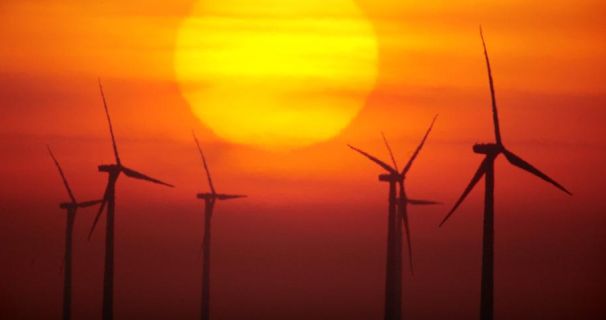
(Cover photo: Solar Wind Farm, Image credit: National Geographic / X)
Posted by Richard Webster, Ace News Today
Follow Richard on Facebook, Twitter & Instagram