






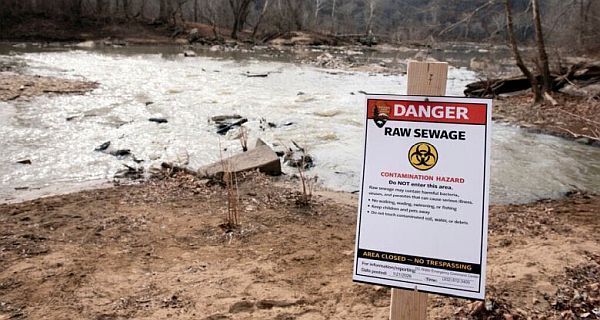
Potomac River Sewage Crisis sparks health warnings and political finger pointing over blame
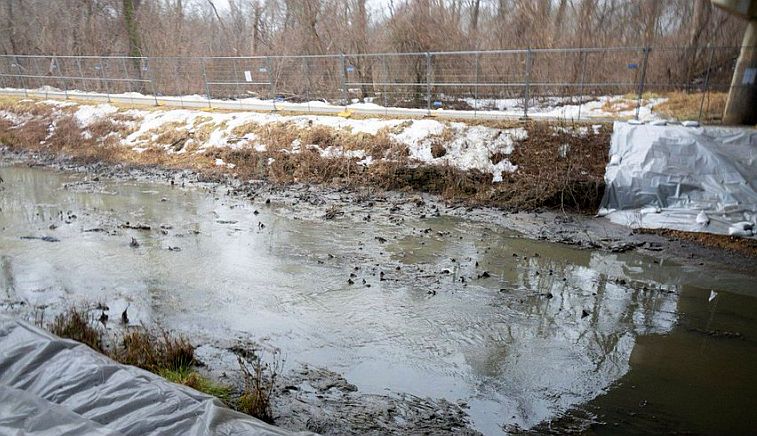
A massive sewage spill in the Potomac River has triggered one of the largest environmental emergencies in U.S. history, after a decades-old sewer line collapsed on January 19 in Montgomery County, Maryland, just north of Washington, D.C.
The rupture occurred along the 54-mile Potomac Interceptor, a major pipeline that carries roughly 60 million gallons of wastewater daily from Maryland and Virginia — including areas near Dulles Airport — to the Blue Plains Advanced Wastewater Treatment Plant in Southwest D.C. Operated by DC Water, the 1960s-era pipe failed near the riverbank, sending an estimated 240 to 243.5 million gallons of raw sewage directly into the Potomac over several days.
Crews completed a bypass by January 24 to divert wastewater around the collapsed section; but intermittent overflows continued into early February as emergency repairs progressed. Long-term rehabilitation could take up to 10 months.
~
Environmental Impact: “Ecological Crisis of Historic Proportion”
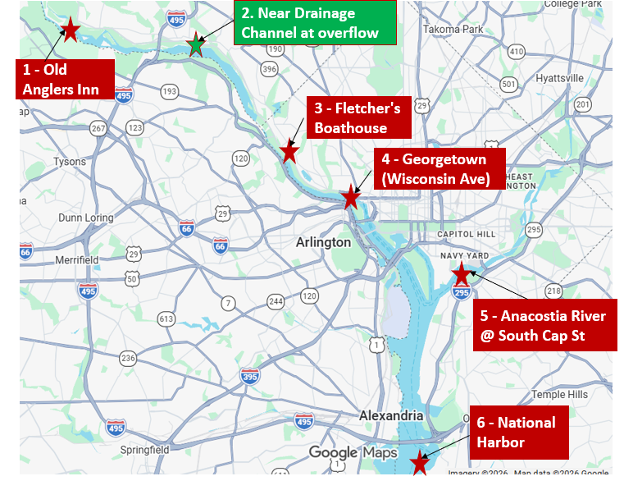
The Environmental Protection Agency (EPA) has described the disaster as an ecological crisis of “historic proportion.” Testing near the spill site found E. coli bacteria levels more than 10,000 times higher than federal safety standards at peak readings.
Raw sewage contains not only bacteria but also viruses, pharmaceuticals, household chemicals and nutrients that can settle into river sediments. Environmental scientists warn these pollutants may disrupt fish and bird reproduction, kill aquatic insects and fuel harmful algae blooms as temperatures rise this spring and summer.
Advocates also fear downstream consequences for the Chesapeake Bay, where decades of restoration efforts could be undermined by the massive nutrient surge flowing out of the Potomac watershed.
~
Impact on Wildlife and Human Health
Public health officials in Maryland and Virginia issued advisories urging residents to avoid swimming, wading, tubing and boating in affected stretches of the river. The Virginia Department of Health extended a recreational advisory along 72.5 miles of the river from the American Legion Bridge to the Governor Harry W. Nice Memorial Bridge.
Emergency responders in Montgomery County were instructed to treat river calls as hazardous-material incidents due to contamination risks. Anyone who comes into contact with the water has been advised to wash thoroughly and seek medical care if symptoms such as gastrointestinal illness or skin infections develop.
So far, officials say drinking water remains safe. Major regional intake points are upstream of the spill site, and both D.C. and Northern Virginia utilities report no contamination of public water systems serving roughly five million residents.
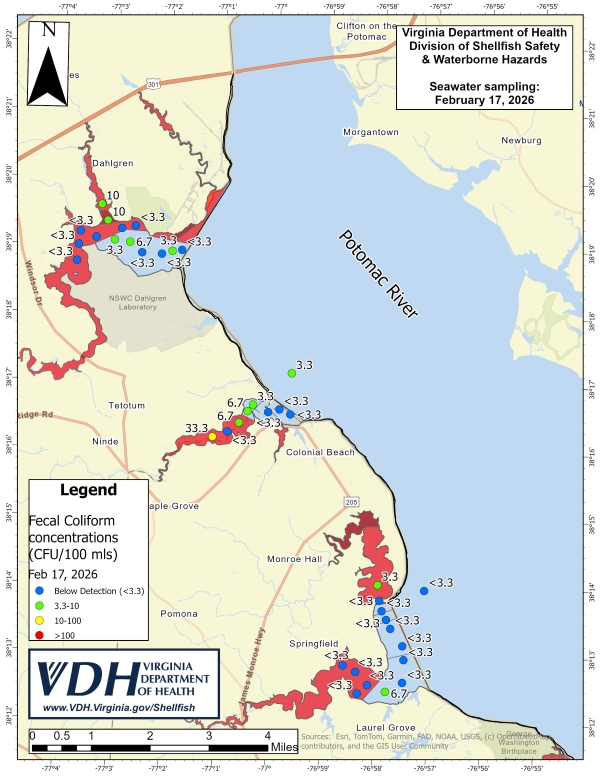
Shellfish harvesting areas in Maryland were temporarily closed downstream to prevent contaminated seafood from entering the food supply. Virginia testing has not detected elevated fecal coliform levels in its shellfish waters.
On February 17, the Virginia Department of Health (VDH) staff conducted a routine seawater sampling run for shellfish growing areas from Colonial Beach to the 301 Bridge, collecting 36 water samples in total. Based on the laboratory analyses, there was no elevated fecal coliform bacteria concentrations, with the vast majority of the samples were at or below the detection limit for the test.
~
Recreation
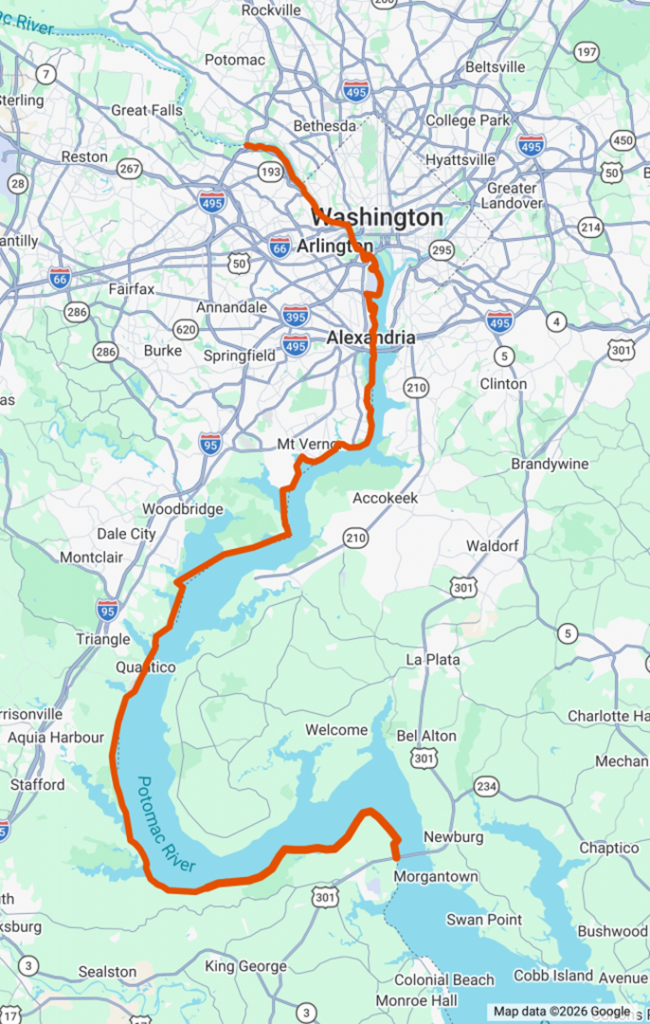
The Virginia Department of Health issued anadvisory for Virginia residents that will remain sustainable repairs can be completed. For the safety of people and pets, VDH is advising Virginia residents to avoid recreational water activities in the Potomac River, such as swimming, wading, tubing, white-water canoeing or kayaking, where full-body submersion is more likely to occur.
The advisory was issued out of an abundance of caution due to a sewage spill in the Potomac River that occurred January 19, and subsequent reports of a sewage discharge February 7. The timeline for the repair is estimated to be four to six weeks. The advisory area extends for 72.5 miles from the American Legion Memorial Bridge (I-495) in Fairfax County to the Governor Harry W. Nice Memorial Bridge (Route 301) in King George County.
~
To prevent recreational water illnesses due to exposure to sewage spill events, people should:
- Avoid contact with water in the advisory area and observe advisory signage posted at waterbody access points.
- Avoid any area of the water body where water has a foul odor, dead or dying fish, or discolored water.
- Promptly wash skin with soap and water if you cannot avoid contact with water in the vicinity.
- Rinse or wash items that come into contact with the water, including clothing, fishing gear, life vests, ropes and paddles.
- Seek medical care and notify your practitioner of the waterbody exposure if you experience adverse health effects after contact with the waterbody.
- When harvesting fish or crabs, discard skin, organs, cook the meat to proper temperature, and clean cutting boards and cutting implements with warm soapy water.
~
Political Ramifications and Accountability Questions
The sewage crisis in the Potomac quickly ignited a multistate political dispute, with Donald Trump criticizing and trying to blame Democratic leaders in Maryland, Virginia and D.C. for the crisis, even though it’s the federal branch of the government and the EPA that is ultimately responsible. Maryland Governor Wes Moore said that maintaining the pipe has long been a federal responsibility, even though he claims that it has been the Maryland Department of the Environment along with DC Water that’s been making the necessary repairs. D.C. Mayor Muriel Bowser declared a public emergency and requested a presidential disaster declaration, seeking full federal reimbursement for cleanup and monitoring costs.
Environmental advocates agree that oversight ultimately rests with the EPA, which regulates interstate waterways under the Clean Water Act. The incident has intensified scrutiny of aging infrastructure nationwide, with experts pointing to corrosion found in the pipe years ago and warning that climate change and heavier rainfall events are increasing stress on old sewer systems.
“The Potomac Interceptor overflow is a sewage crisis of historic proportion,” the EPA said in its first statement about the disaster. “Never should any American family, community, or waterway ever have to experience this level of extensive environmental damage.” ~ NBC News
“This is a wake-up call,” said regional conservation leaders, noting that much of America’s underground wastewater infrastructure dates back decades and has not kept pace with population growth or modern environmental standards.
~
What’s Next
Emergency repairs are expected to stabilize the collapsed section by mid-March, with a steel bulkhead gate isolating the damaged pipe. Officials say daily water-quality monitoring will continue for months, and some experts recommend sustained testing through the summer.
Beyond containment, lawmakers in Maryland and Virginia are demanding a full investigation into the cause of the collapse, long-term funding commitments for infrastructure upgrades and clearer coordination among local, state and federal agencies.
While bacteria levels near Washington have begun to fall — aided in part by cold winter conditions — environmental scientists caution that the true ecological toll may not be known until warmer weather reveals the spill’s lingering effects.
For now, officials’ message to residents is simple: stay out of the water, stay informed, and prepare for a prolonged recovery for one of the nation’s most historic rivers.
For more information about the environmental disaster in the Potomac, see the video below.
~
(Sources: PBS, NPR, Virginia Department of Health, NBC News)
(Cover photo, image credit: X)
Posted by Richard Webster, Ace News Today
Follow Richard on Facebook, Twitter & Instagram