




Millions join ‘No Kings’ protests across U.S. and worldwide in one of largest mass mobilizations ever
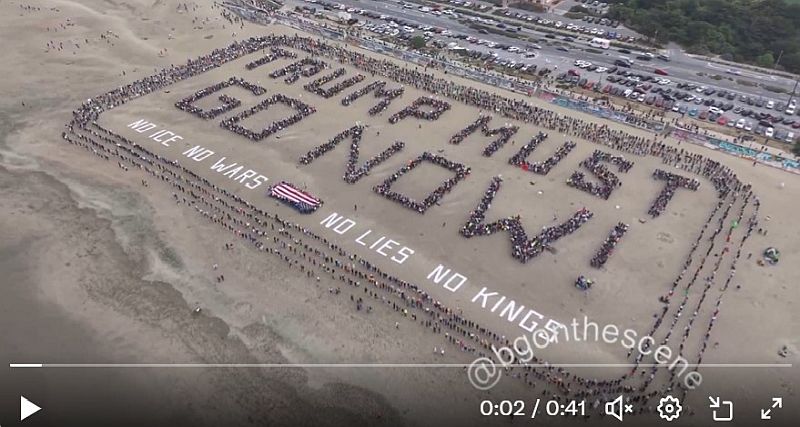
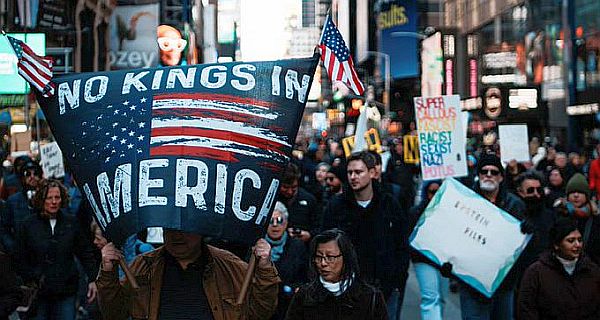
A sweeping wave of “No Kings” protests drew millions of demonstrators across the United States and around the globe on March 28, 2026, as critics of President Donald Trump rallied against what they describe as authoritarian leadership, overly aggressive immigration enforcement, and U.S. involvement in foreign conflicts. Organizers estimated that more than 8 million people participated in over 3,300 events worldwide—potentially making it one of the largest coordinated protest movements in modern history.
From major cities like New York, Los Angeles, and Washington, D.C., to small towns in conservative-leaning states, protesters carried signs, chanted slogans, and called for what they say is a defense of democratic norms. The largest single gathering took place in St. Paul, Minnesota, where more than 200,000 people filled the Capitol grounds and surrounding streets.
Minnesota emerged as the symbolic epicenter and flagship for the movement, fueled in part by outrage over the January shootings of two civilians by federal immigration agents.
The two people killed by federal agents in Minneapolis in January 2026 during immigration enforcement operations (Operation Metro Surge) were Renée Good and Alex Pretti. Good, 37, a U.S. citizen, was shot and killed by a U.S. Immigration and Customs Enforcement (ICE) agent on January 7, 2026. Pretti, also 37, an ICU nurse and U.S. citizen, was shot and killed by Customs and Border Protection (CBP) officers on January 24, 2026. ~ PBS
The St. Paul rally featured a high-profile lineup of speakers and performers, including Bruce Springsteen, who debuted his protest song “Streets of Minneapolis.” He was joined by activists and public figures such as Joan Baez, Jane Fonda, and Sen. Bernie Sanders, underscoring the event’s national significance. Demonstrators there—and across the country—voiced opposition to Immigration and Customs Enforcement (ICE) operations, the ongoing war in Iran, and what they view as an erosion of civil liberties.
Beyond Minnesota, massive crowds gathered nationwide. Tens of thousands marched through Manhattan, while large demonstrations shut down streets in Philadelphia, Chicago, and San Diego. In Washington, D.C., protesters filled the National Mall and Lincoln Memorial, chanting “No kings” and carrying signs like “Regime change begins at home.” Even smaller communities—from Idaho to Louisiana—reported notable turnout, reflecting the movement’s broad geographic reach.
Internationally, the protests underscored growing global concern over U.S. policies and wider geopolitical tensions. Demonstrations were reported in cities including London, Paris, Rome, and Lisbon, often blending criticism of Trump with opposition to the war in Iran and rising right-wing politics in Europe. In Rome, thousands marched against both U.S. and Italian leadership, while in Paris and London, protesters—many of them American expatriates—joined local labor unions and activist groups calling for peace and democratic protections.
While the vast majority of protests were described as peaceful and even celebratory in tone, some incidents of unrest were reported. In Los Angeles, law enforcement deployed tear gas near a federal facility, and arrests were made after clashes with demonstrators. Denver police declared an unlawful assembly after roads were blocked, while smaller scuffles and arrests were reported in Dallas and other cities. Still, organizers emphasized that such incidents were limited compared to the scale of participation, with most events proceeding without violence.
In Maryland, thousands took part in coordinated demonstrations across the state. Baltimore saw nearly 1,000 marchers downtown, while Hagerstown drew between 2,500 and 3,000 participants protesting a proposed ICE detention center. Rallies also took place in Columbia, Bethesda, Annapolis, and other communities, with participants highlighting immigration, voting rights, and healthcare policy concerns.
In Florida, more than 100 events were held statewide, making it a major hub of activity. Large crowds gathered in Tallahassee, Gainesville, Orlando, and West Palm Beach, where a “twilight march” toward Mar-a-Lago drew thousands. While most events remained peaceful, some verbal confrontations occurred between protesters and pro-Trump counter-demonstrators in South Florida.
In Washington, D.C., the nation’s capital saw one of its largest protest days in recent years, with demonstrators marching past iconic landmarks and filling public spaces in a highly visible show of dissent.
Despite the scale of the demonstrations, the White House dismissed the protests as politically motivated and lacking broad support, while organizers insisted the turnout reflected growing concern across ideological and geographic lines. Many participants said the protests were not just about immediate grievances but about long-term democratic engagement, urging continued activism through voting and civic action.
Organizers of the “No Kings” movement say this latest wave is only the beginning of sustained nationwide activism heading into upcoming elections. With momentum building from millions of participants, future demonstrations—and their potential political impact—are expected to remain a significant force in shaping the national conversation in the months ahead.
~
(Sources: USA Today, CBS News, NBC Washington, Maryland Matters, Florida Today, CNN, BBC, PBS)
Posted by Richard Webster, Ace News Today
Follow Richard on Facebook, Twitter & Instagram