




States sue to block Trump’s mail-in voting crackdown, citing ‘Unconstitutional Power Grab’
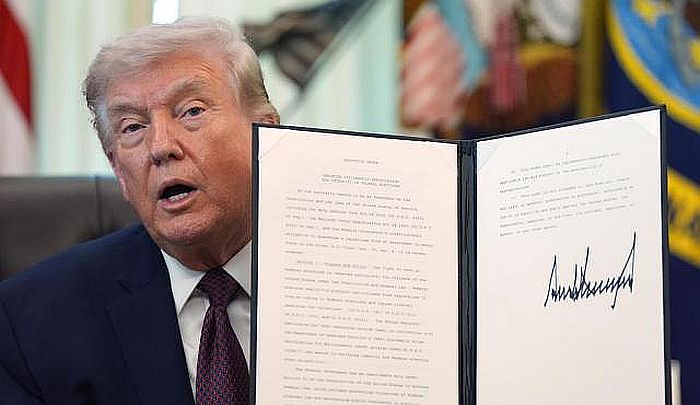
A coalition of 23 U.S. states is suing Donald Trump to halt a sweeping executive order aimed at restricting mail-in voting, setting up a major constitutional clash over who controls American elections just months before the 2026 midterms. Trump signed the executive order on March 31, framing it as an effort to ensure “honest voting” and election integrity. The move follows years of his repeated—though widely debunked—claims of widespread fraud tied to mail-in ballots.
Trump’s order directs federal agencies, including the Department of Homeland Security and Social Security Administration, to compile a national list of verified U.S. citizens eligible to vote. It also instructs the U.S. Postal Service to send mail-in ballots only to voters on state-approved absentee or mail-in lists, rather than broader automatic distribution systems used in several states.
Additional provisions in the Trump executive order include:
- Requiring secure ballot envelopes with trackable barcodes.
- Authorizing investigations and possible prosecution of election officials who distribute ballots to ineligible voters.
- Threatening to withhold federal funding from states that do not comply .
But who really controls elections? And what does the Constitution say? At the heart of the legal battle is a fundamental issue as the U.S. Constitution gives the individual states, not the president, authority over elections.
Under Article I, states have primary responsibility to determine the “time, place, and manner” of federal elections, while Congress may set or alter those rules. Legal experts note the executive branch has no direct authority to unilaterally change election laws, a key argument in the states’ lawsuit.
So, why are the States suing Trump over his executive order? Led by attorneys general from Maryland, New York, California, and others, the coalition argues Trump’s order:
- Violates state authority to administer elections
- Forces states to overhaul existing voting systems on short notice
- Threatens to disenfranchise eligible voters
- Creates confusion and instability ahead of a national election
Maryland Attorney General Anthony Brown called the order an “unprecedented assault” on democratic processes, while New York Attorney General Letitia James said no president has the power to “rewrite election rules on his own.”
~
States also argue the order could disrupt long-standing vote-by-mail systems, including in places where ballots are automatically sent to all registered voters.
~
The Mail-In Voting Debate: Pros and Cons
Pros:
- Expands access for voters who are elderly, disabled, traveling, or in the military
- Increases overall voter participation and convenience
- Provides a paper trail that can be audited
- Widely used across political parties, including by Trump and his family
Cons:
- Critics argue it may increase the risk of fraud (though evidence remains limited)
- Potential for administrative errors, such as outdated voter rolls
- Concerns over ballot security and chain of custody
- Slower vote counting in some jurisdictions
The lawsuit, filed in federal court, seeks to block enforcement of the executive order before it can take effect. Legal analysts expect a prolonged court fight, with early rulings likely to determine whether the policy impacts the November midterm elections. Given previous court challenges to similar election-related orders, judges may again weigh whether the president exceeded constitutional authority—potentially fast-tracking the case toward the Supreme Court.
For more on the recent lawsuit claiming that Trump’s executive order targeting voting by mail is unconstitutional, see the video below.
~
(Sources: BBC, Time Magazine, CNBC, Office of the Maryland Attorney General)
Posted by Richard Webster, Ace News Today
Follow Richard on Facebook, Twitter & Instagram