






NASA shares 2020 successes with an eye toward the future
This past year, NASA made significant progress on America’s Moon to Mars exploration strategy, met mission objectives for the Artemis program, achieved significant scientific advancements to benefit humanity, and returned human spaceflight capabilities to the United States, all while agency teams acted quickly to assist the national COVID-19 response.
“NASA has impressed the nation with our resilience and persistence during the pandemic,” said NASA Administrator Jim Bridenstine. “We made history with a U.S. commercial partner, made groundbreaking discoveries, advanced science, furthered aeronautics research and technology development, and even joined in the fight against COVID-19. We met an incredibly challenging year with incredible achievements and established a path for continued success.”
The space agency’s aid to the federal pandemic response included development of a surface decontamination system, a ventilator developed by engineers in just 37 days, and an oxygen helmet to treat COVID-19 patients.
In 2020, astronauts launched from American soil to the International Space Station for the first time since 2011 and, for the first time ever, on an American commercial spacecraft. The return of crewed launches to U.S. shores arrived during the 20th year of a continuous human presence aboard the space station, enabling more critical science to prepare for future Artemis missions.
NASA advanced its plan for a robotic and human return to the Moon under the Artemis program, is on track for its first two robotic deliveries next year, named astronauts to the Artemis Team, and identified science priorities and activities for the Artemis III mission to land the first woman and next man on the lunar surface in 2024.
Robotic and human exploration go hand-in-hand, with the former leading the way to smarter, safer human missions. NASA launched its Mars 2020 Perseverance rover mission to the Red Planet in July, and it’s now more than halfway to its destination. Track the rover’s journey in real time using the Eyes on the Solar System application.
NASA took a major step in solidifying international cooperation for exploration with the signing of the Artemis Accords between NASA and eight partner countries. The accords implement the Outer Space Treaty and other international agreements to establish a set of principles to guide cooperation among nations participating in the agency’s lunar exploration plans, such as the full, timely, and public release of scientific data. By committing to the principles of the Artemis Accords, NASA and its partners help ensure humanity can enjoy a peaceful and prosperous future in space.
In a first for NASA, the Origins, Spectral Interpretation, Resource Identification, Security, Regolith Explorer (OSIRIS-REx) spacecraft briefly touched and collected samples from the asteroid Bennu Oct. 20. The samples will return to Earth in 2023.
The James Webb Space Telescope, the agency’s next great observatory, made progress toward its launch in 2021, now targeted for Oct. 31.
Moon to Mars
Throughout the decade, NASA will send new science instruments and technology demonstrations to study the Moon, send astronauts to the lunar surface beginning in 2024 and about once per year thereafter, and will establish sustainable lunar exploration with our commercial and international partners. This year, NASA:
- Transported the core stage for the Space Launch System (SLS) rocket in early January from NASA’s Michoud Assembly Facility in New Orleans to the agency’s Stennis Space Center near Bay St. Louis, Mississippi, where engineers are conducting the Green Run test series.
- Completed a structural testing series to evaluate the upper part of the SLS rocket and four of the core stages structures, ordered 18 additional RS-25 rocket engines and additional boosters, continued manufacturing rockets for Artemis II and III, and fired up a flight support booster for future SLS missions.
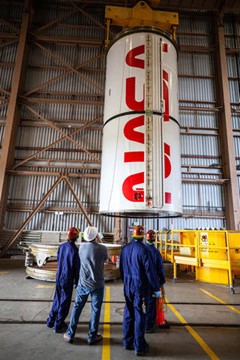
- Finished modifications and upgrades to prepare Launch Pad 39B at Kennedy Space Center in Florida for Artemis missions. Exploration Ground Systems teams also simulated portions of the launch countdown, prepared for the tanking process with a simulated launch, and started stacking the rocket for the Artemis I launch.
- Completed a rigorous test campaign with the Orion spacecraft, installed four solar array wings and fitted three spacecraft adapter jettison fairing panels, attached the forward bay cover to the spacecraft for the Artemis I mission, and continued manufacturing spacecraft for Artemis II and III.
- Completed a set of technical lander studies to pave the way for a human landing system (HLS) solicitation. NASA has since partnered with three companies – Blue Origin Federation, Dynetics, and SpaceX – to advance their HLS designs. All three companies recently passed a certification baseline review that finalized functional and performance requirements.
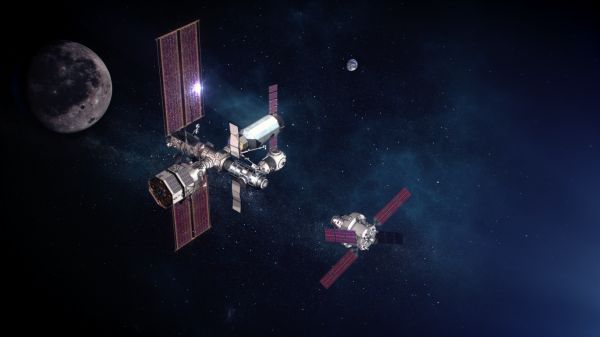
Plans to develop the Gateway in lunar orbit reached several milestones.
- The agency awarded Northrop Grumman a contract to develop the Habitation and Logistics Outpost (HALO), which will be a crew cabin for the lunar outpost. HALO and the Power and Propulsion Element will launch to space together as the foundation for the initial Gateway capability.
- When it launches, Gateway will carry two space weather instruments to help forecast weather for future crew missions. SpaceX, the first company to receive a resupply contract, will deliver new experiments and other supplies.
- NASA finalized two of three anticipated agreements with international partners for Gateway contributions and expects to complete the third within a month. Under its agreement, which was finalized in October, ESA (European Space Agency) will provide a large habitation module, as well as a refueling module and advanced communications. The Canadian Space Agency, which finalized its agreement in November, will provide the Gateway’s external robotics system, including the next generation robotic arm, Canadarm3, and robotic interfaces for the Gateway modules to enable payload installation.
To prepare for future crew missions, the agency:
- Hosted in January its first public astronaut graduation, welcoming 11 members to its corps. Several of NASA’s newest astronauts were among the 18 named to the agency’s Artemis Team in December.
- Announced a call to #BeAnAstronaut candidate, garnering more than 12,000 applications for the next Artemis Generation astronauts. NASA will select the most qualified candidates in late 2021.
- Studied crew members at three different mission durations aboard the space station and continued to use analogs in the United States and in Germany to provide data on isolation and other conditions.
Science and technology progress for Artemis includes:
- As part of its Commercial Lunar Payload Services (CLPS) initiative, the agency assigned a suite of payloads to the first two commercial Moon deliveries set to land on the Moon in 2021, and awarded task orders to Masten Space Systems, Intuitive Machines, and Astrobotic.
- NASA and partners matured a drill and water-measuring payload called PRIME-1 for lunar delivery in 2022, instruments that will also be part of the agency’s VIPER rover.
- Following an earlier announcement, NASA released its first call for Payloads and Research Investigations on the Surface of the Moon, or PRISM, and collected responses in early December.
- Introduction of the Artemis Base Camp concept, which calls for the infrastructure NASA and its partners will need to establish a sustainable human presence on the Moon.
- Industry input on rover concepts for both humans and robots.
- NASA selected four companies to collect a small amount of lunar regolith from the Moon and transfer ownership of it to NASA as an early demonstration of a public-private partnership for in-situ resource utilization.
The agency outlined how investing in the Moon today prepares for exploration tomorrow.
- The Mars 2020 Perseverance rover, named in an essay contest, will seek signs of ancient life and collect samples to send back to Earth.
- Perseverance is carrying a number of critical instruments and technologies, including an investigation to study spacesuit materials and a new method of producing oxygen from carbon dioxide. Sensors on the spacecraft also are prepared to collect data during landing while an autopilot technology called terrain relative navigation will help the rover touchdown safely on the Red Planet in February 2021.
- Also onboard the rover is the Ingenuity Helicopter, which will be the first aircraft to attempt controlled flight on another planet.
Solar System and Beyond
In 2020, NASA also renamed a telescope for a space icon, and helped confirm water on new areas of the Moon. Highlights from the year include:
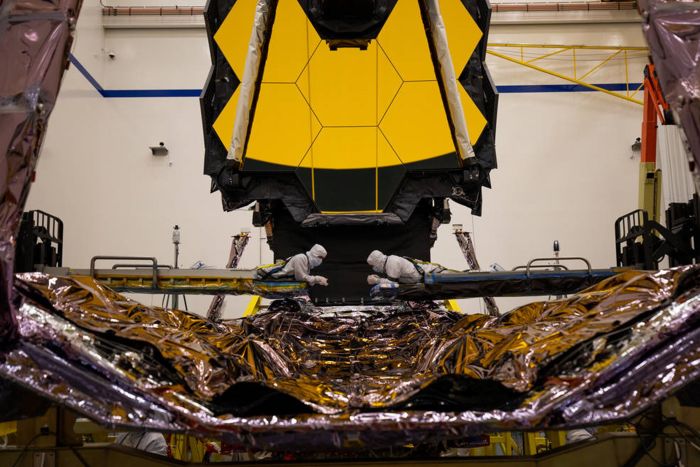
- The James Webb Space Telescope completed a series of rigorous environmental tests – including comprehensive systems tests, a ground segment test, and final observatory acoustics and vibration environmental tests.
- The Hubble Space Telescope celebrated its 30th anniversary in space, and continued making groundbreaking discoveries in 2020, such as the “disappearing” exoplanet Fomalhaut b and the best evidence yet for a mid-sized black hole.
- Astronomers confirmed the first planet around a white dwarf, using data from TESS and the retired Spitzer Space Telescope.
- After more than 16 years studying the universe in infrared light, NASA’s Spitzer Space Telescope’s mission came to an end in January.
- For the first time, scientists discovered water on the sunlit side of the Moon using NASA’s airborne observatory SOFIA.
- Data from the retired Kepler Space Telescope revealed that about half of Sun-like stars could host rocky planets in the habitable zone.
- NASA scientists used computer simulations to show how the Moon and Earth once shared a magnetic field.
- The Wide Field Infrared Survey Telescope was re-named the Nancy Grace Roman Space Telescope, after NASA’s first chief astronomer Nancy Grace Roman. It will investigate long-standing astronomical mysteries, such as the force behind the universe’s expansion, and search for distant planets beyond our solar system.
- More than 15,000 participants from 150 countries participated in the virtual Space Apps COVID-19 Challenge in May. In October, more than 26,000 participants from around the world participated in the virtual Space Apps Challenge.
- In heliophysics, the agency joined ESA to launch a solar satellite to study our Sun’s poles. ESA released the first Solar Orbiter data to the scientific community and the wider public in September.
- The Sun is stirring from its latest slumber. As sunspots and flares bubble from the Sun’s surface, the signs of a new solar cycle, the agency discussed what Solar Cycle 25 will look like.
- Scientists continued to observe and model an unusual weak spot in Earth’s magnetic field to monitor and predict future changes and help prepare for future challenges to satellites and humans in space.
- In August, NASA selected five proposals for concept studies of missions to help improve understanding of the dynamics of the Sun, the changing space environment, and interaction with Earth.
- NASA announced the selection of eight new interdisciplinary research teams, inaugurating its Interdisciplinary Consortia for Astrobiology Research program.
- NASA’s Juno spacecraft’s Jovian Infrared Auroral Mapper (JIRAM) instrument provided the first infrared mapping imagery of the north pole of Jupiter’s moon Ganymede.
- NASA selected four Discovery Program investigations to develop concept studies for new missions focused on compelling targets and science not covered by NASA’s active missions or recent selections.
- Just two days after OSIRIS-REx touched Bennu, images confirmed the spacecraft collected more than enough material to meet one of its main mission requirements.
- This year included several high visibility events for NASA’s Planetary Defense Coordination Office, including the close approach of near-earth asteroid 2020 OR2 and the flyby of Comet NEOWISE.
- NASA established a Mars Sample Return Independent Review Board, evaluating its early concepts for partnership with ESA to return the first samples from another planet. The board’s report with NASA’s responses released in October found the agency is now ready to undertake its Mars sample return campaign.
- This year, NASA’s Science Mission Directorate added a new division, Biological and Physical sciences, which focuses on scientific discovery in and beyond low-Earth orbit.
Humans in Space
Access to low-Earth orbit and the International Space Station expanded to more people, more science, and more commercial opportunities. In 2020:
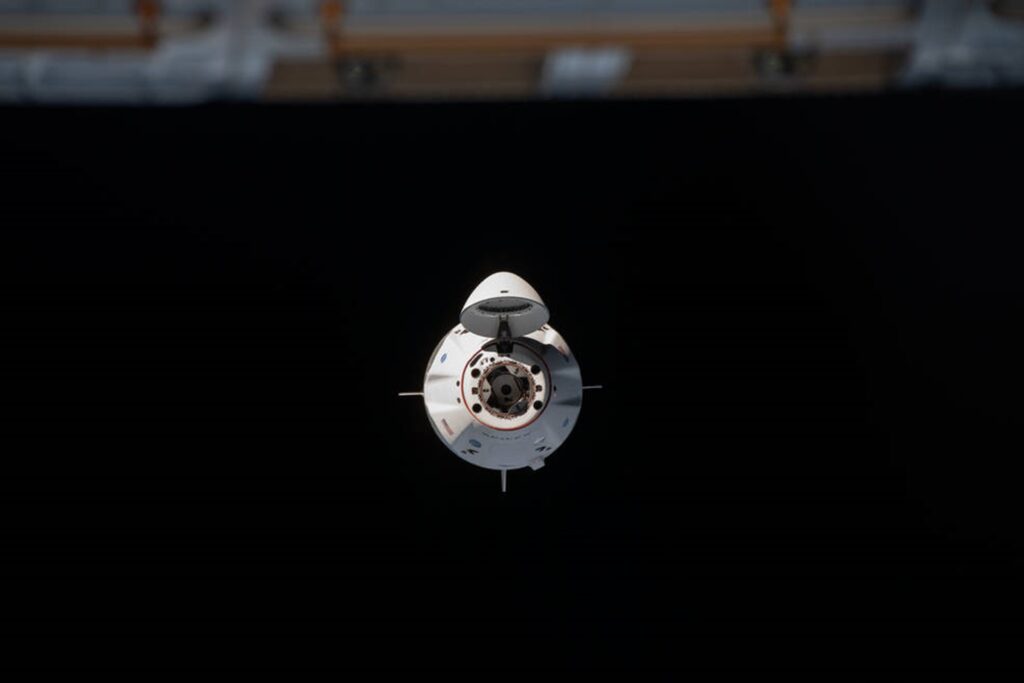
- NASA astronauts Christina Koch, Andrew Morgan, Jessica Meir, Chris Cassidy, Robert Behnken, Douglas Hurley, Kate Rubins, Michael Hopkins, Victor Glover, and Shannon Walker lived and worked aboard the International Space Station.
- Koch returned to Earth after an extended mission to provide further opportunities to observe the effects of long-duration space travel during which she set a record for the longest single spaceflight by a woman.
- For the first time, NASA astronauts launched from American soil to the station in a commercially built and operated American crew spacecraft when Behnken and Hurley lifted off in a SpaceX Crew Dragon atop a SpaceX Falcon 9 rocket for NASA’s SpaceX Demo-2 mission, a successful 64-day test flight that paved the way for NASA to certify the commercial space system.
- NASA’s SpaceX Crew-1 mission launched to the International Space Station, delivering Hopkins, Glover, and Walker along with Japan Aerospace Exploration Agency (JAXA) astronaut Soichi Noguchi for a six-month science mission, expanding the station crew to seven for a long-duration mission.
- Five NASA astronauts participated in seven spacewalks to complete repairs for an instrument searching for dark matter, anti-matter, and dark energy, upgrade the space station’s power system and other station systems.
- NASA and Boeing made progress toward the company’s second uncrewed flight test of its CST-100 Starliner spacecraft prior to flying astronauts to the International Space Station as part of NASA’s Commercial Crew Program.
- Four commercial cargo missions delivered more than 26,000 pounds of science investigations, tools, and critical supplies to the space station, and returned 3,700 pounds of investigations and equipment to researchers on Earth. Commercial resupply missions also included delivery of a new space toilet and other life support system upgrades to be tested for future Moon missions and the first privately funded commercial airlock, as well as opened the space station to business with commercial agreements.
- Space station research also improves our understanding of fundamental science such as how metal becomes glass and how cells react to gravity. Investigations conducted for the U.S. National Laboratory benefit life on Earth by identifying targeted cancer therapies, improving understanding of heart health, and improving water flow in showers.
Flight
NASA’s aeronautics team achieved major milestones in its efforts to enable commercial supersonic air travel over land, advance electric-powered flight, improve air mobility, benefit air traffic management, and evolve other aviation technologies.
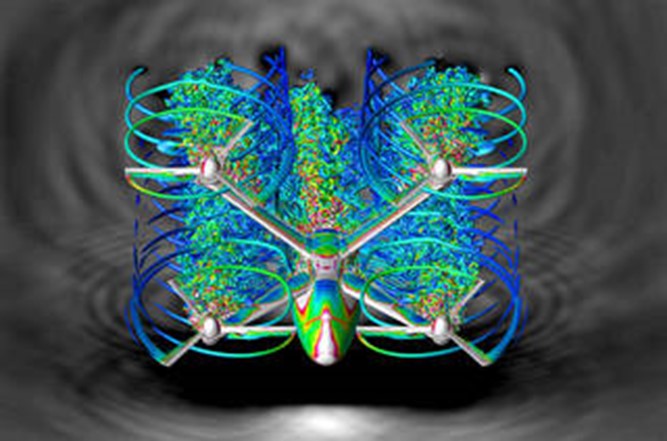
Assembly of NASA’s X-59 Quiet Supersonic Technology aircraft continued during 2020. The X-59 is taking shape, with significant work completed on its wings, cockpit, and eXternal Vision System. NASA also received delivery of the F414-GE-100 engine for installation into the X-59, which is now under construction at Lockheed Martin’s Skunk Works factory.
NASA’s research into electric-powered flight led to several significant accomplishments, including advanced designs that will propel NASA’s first all-electric X-plane, the X-57 Maxwell, underwent wind tunnel testing at Langley Research Center in Virginia.
NASA completed assembly and qualification tests for the X-57 on two critical components: the electric cruise motors and the high-aspect ratio wing that will fly on the aircraft in the X-57’s final configuration.
The Advanced Air Mobility National Campaign is working with the Federal Aviation Administration to ensure future air taxis, drones, package delivery services, and others can all fly harmoniously in our national air space alongside piloted aircraft. The series of flight tests kicked off at the end of 2020 with a dry run to learn how to integrate these new vehicles with existing air traffic.
A NASA patent for traffic management of Unmanned Aircraft System vehicles earned the 2020 Government Invention of the Year.
NASA researchers conducted Unmanned Aircraft Systems (UAS) flight tests of drone aircraft at NASA’s Ames Research Center to investigate the feasibility of a concept called Time-Based Conformance Monitoring, which helps air traffic controllers or traffic management services ensure aircraft adhere to their assigned flight trajectories.
The UAS Integration in the National Airspace System project closed out in 2020 after nine years of successful research and testing.
NASA researchers at the Airspace Operations Laboratory at Ames developed augmented reality software to make useful information about all kinds of vehicles in our skies, like drones, more widely available.
A new research activity, called Scalable Traffic Management for Emergency Response Operations, or STEReO, began work on the tools needed to aid emergency responders in natural disasters such as wildfires and hurricanes using drones.
NASA’s aeronautical innovators continued research into advanced technologies that could be used by the next generation of passenger airplanes to make them quieter, cleaner and more efficient.
Research projects gathering data on aircraft noise and testing an air traffic management digital communications tool flew aboard a Boeing 787.
Space Technology
This year, NASA advanced transformative technologies for the Moon and other, more distant destinations. The agency established new capabilities and supported industry- and academia-led technology development to enable future missions. Highlights include:
- Technologies to enable exact and soft landings on the Moon and other worlds flew on Blue Origin’s New Shepard suborbital rocket. The flight tested two NASA-developed precision landing sensor systems, advanced algorithms, and a new computer.
- Engineers prepared NASA’s next laser communications demonstration for launch in early 2021. The NASA team delivered the flight payload to Northrop Grumman for integration into the U.S. Air Force’s Space Test Program Satellite 6 (STPSat-6) and final testing. NASA installed a new optical ground station in Haleakala, Hawaii – one of two locations that will receive the mission’s data.
- NASA selected 14 American companies as partners to develop a range of “tipping point” technologies that will help forge a path to sustainable operations on the Moon.
- The Green Propellant Infusion Mission wrapped up after more than a year in space and proved that a new propulsion system and less-toxic spacecraft fuel are viable options for future missions.
- NASA awarded contracts to hundreds of U.S. small businesses to advance aeronautics and space capabilities, including seven new follow-on funding awards to accelerate the development of lunar technologies.
- The agency selected 17 U.S. companies for 20 partnerships to mature industry-developed space technologies for the Moon and beyond.
- More than 4,500 users outside the agency downloaded NASA-developed software programs to use for business and other purposes, the most yearly licensing agreements issued in agency history.
- Collaboration began with the construction technologies company ICON on early research and development of a space-based 3D printing system.
- The Flight Opportunities program chose 31 technologies for testing on suborbital platforms, including its first selection of a researcher-tended payload.
- NASA added a technology demonstration to the On-Orbit Servicing, Manufacturing, and Assembly 1 mission (formerly Restore-L). The payload will robotically assemble a communications antenna and manufacture a spacecraft beam.
- NASA’s Deep Space Atomic Clock became one of the most stable clocks to ever fly in space, and the agency extended the mission through August 2021.
- Early career NASA researchers matured a space recycling technology that could boost deep space human exploration missions via a microgravity flight test.
- The Space Technology Mission Directorate established the Lunar Surface Innovation Consortium, bringing together people from more than 280 academic, commercial, non-profit, and government organizations to help shape technologies needed to explore the surface of the Moon in new ways.
Earth
In 2020, NASA continued to use its global perspective of seeing Earth from space to improve lives and revolutionize understanding of how the planet is changing.
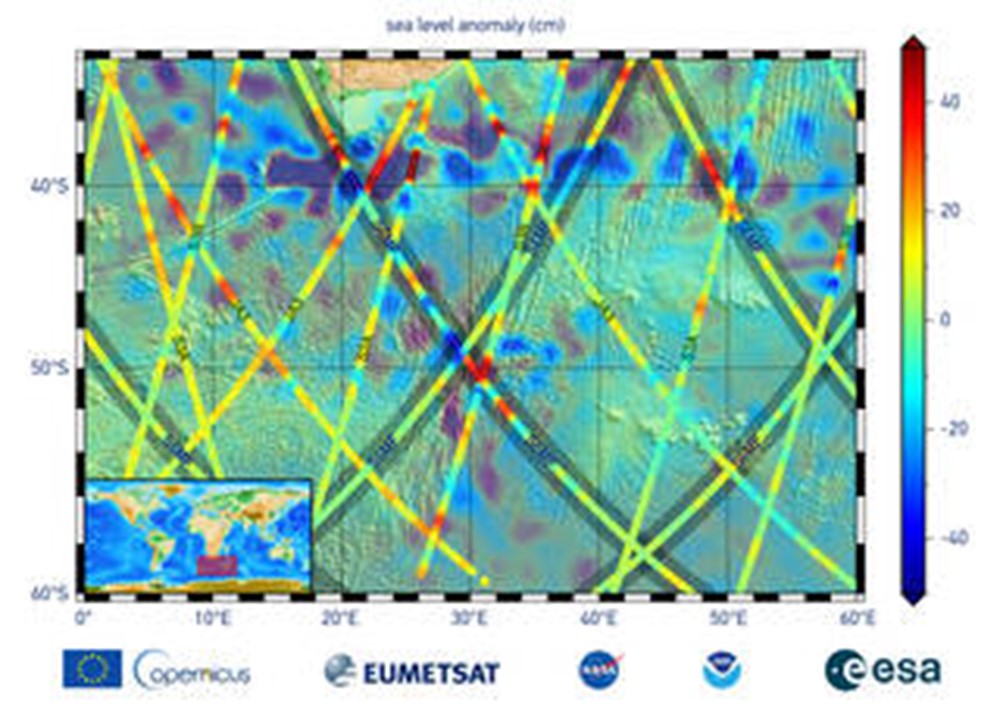
- The successful launch of the Sentinel-6 Michael Freilich satellite, a U.S.-European mission to advance more than 30 years of continuous measurement of sea level across the globe, capped another year of innovation and discoveries as NASA studies how Earth’s systems connect to each other and to us.
- NASA built an easy-to-use online dashboard tracking environmental changes during the COVID-19 pandemic. The agency also partnered with ESA and JAXA on a tri-agency Earth Observing Dashboard, which incorporates complementary data on pandemic-related environmental changes.
- Natural hazards – including hurricanes, flooding, heatwaves, wildfires, landslides, and even dust storms – hit the U.S. and elsewhere around the world throughout 2020. NASA’s satellite and airborne observations helped predict and track the events and their intensity, sent crucial data to first responders and relief services, and helped remediation efforts afterward.
- NASA launched an online platform called OpenET to give water managers daily measurements of evapotranspiration, the process by which water moves into the atmosphere from soil and plants. NeMO-Net, a new mobile app, takes coral type input by users to train computers to identify images of coral collected by planes and drones using special fluid-lensing cameras.
- Earth Science’s continued measurements of climate changes, from sea ice to ozone levels, advanced again with the announcement of the Libera instrument, a new space-based instrument to measure the balance of solar radiation absorbed and emitted by Earth’s atmosphere.
- A 3D, high-resolution model of methane concentrations uses multiple data sets from ground- and space-based emissions inventories, providing a new tool for understanding methane, the second most influential greenhouse gas, which is responsible for 20-30% of the planet’s rising temperature,
STEM Engagement
NASA engaged students through virtual learning and challenges in response to the global COVID-19 pandemic.
- Starting in March, NASA STEM @ Home received 1.3 million visits as a compiled resource for kids and families to participate in fun STEM activities easily done at home while deepening their understanding of the agency’s work and missions.
- The agency awarded approximately $2.4 million in funding to six universities as part of the agency’s Artemis Student Challenges program which transitioned virtually this year. NASA’s Student Launch and Human Exploration Rover Challenge used data, scores, and reports that were already collected throughout the competition year to award teams based on work already completed.
- The NASA SUITS challenge transitioned to a completely virtual competition for the remainder of the 2020 competition, allowing teams to present their designs virtually. SUITS will continue the virtual only competition for 2021.
- Micro-g NExT teams remotely directed divers to test their 2020 designs at the Neutral Buoyancy Lab. The divers conducted tests of the student-built tools that focused on the needs of the Artemis missions on the lunar surface.
- NASA conducted 2,011 internships and immersed new interns in the NASA community through 20 large-scale virtual events with NASA subject matter experts and leadership and the first virtual downlink with astronaut Chris Cassidy.
Public Engagement
Inspiration is the foundation of NASA’s public engagement program. As the pandemic limited in-person events around the world, NASA’s virtual events and digital platforms provided new opportunities to connect people around the world with agency content.
- NASA now has more than 240 million social media followers so far in 2020 – up 15% from 207 million in 2019.
- Shares on social media posts across the agency have increased 49% with 12.7 million so far in 2020, up from 8.5 million in 2019.
- Flagship Twitter and Instagram accounts grew into the most-followed government agencies on each respective social platform this year. The flagship Twitter now has over 42 million followers, while the flagship Instagram has 61 million. The agency’s email newsletter has gained 1.1 million subscribers since the beginning of 2020. The largest growth occurred on July 30, with 140,000 new subscribers due in part to interest in Mars 2020 Perseverance launch content and international popularity during the launch broadcast.
- More than 10.5 million viewers watched the live broadcast of NASA’s SpaceX Demo-2 launch, with an additional 1.7 million peak viewers watching the live broadcast of Demo-2 splashdown. Google searches on Demo-2 resulted in more than 1.7 million impressions and 570,000 clicks on NASA content.
- The agency established a presence on Daily Motion’s video sharing service, Theta TV; released event-themed augmented reality filters for high-profile events; and became the first federal government agency to use LinkedIn live.
- NASA received 12 nominations in the 2020 Webby Awards this year, a record for the agency, winning in four categories that highlighted the agency’s diverse digital offerings in websites, social media, and apps across its broad programs.
The agency hosted in-person events as the year began, including a Jan. 10 graduation ceremony at Johnson Space Center for the new class of astronauts. Following a pivot to virtual engagements in March, the agency hosted 66 livestream events on NASA’s flagship YouTube, along with several other events:
- NASA had a significant virtual exhibit presence at the International Astronautical Congress with almost 30,000 visits.
- NASA’s presence at SciFest, the virtual USA Science and Engineering Festival, included nine separate exhibits and multiple speakers.
- The agency made great strides developing other museum exhibitions and is in the planning stages of developing a Women and Space traveling exhibition with the Smithsonian Institution Traveling Exhibition Service and the National Air and Space Museum.
- NASA also is an active partner with the State Department in developing Expo Dubai, lending several artifacts including both lunar and Martian samples.
- NASA held its annual Day of Remembrance in January, including a ceremony at Arlington National Cemetery attended by family members of our fallen astronauts.
- The agency’s Black History Month program, Trailblazers – The Story of a Tuskegee Airman, featured Honorary Brigadier General Charles McGee
With COVID-19 restrictions limiting in-person activities for agency events, NASA successfully pivoted to a safe, hybrid model of both in-person and virtual guest operations for launches. The Virtual Guest Operations effort had registered 204,603 remote attendees by early December.
- Significant events included NASA’s SpaceX Demo-2 mission, which included hosting the president and vice president of the United States and other senior officials. NASA’s SpaceX Crew-1 launch activities included the vice president and senior Department of Defense officials.
New and ongoing collaborations demonstrated increasing commercial interest this year in NASA missions and content. Some highlights include:
- Supporting commercial space with a symbolic ringing of the opening Nasdaq bell from the International Space Station. Astronauts Chris Cassidy, Douglas Hurley, and Robert Behnken rang the Captain’s Bell on the space station to ring in the Nasdaq markets June 2. Video from the space station was projected onto NASDAQ’s Times Square screen.
- Displaying NASA’s 50th Anniversary Earth Day poster in Times Square throughout Earth Day.
- Collaborating with LEGO on a 50th Earth Day anniversary building challenge. Featuring more than 1,500 user-generated builds, the event was the most engaged daily LEGO build challenge of the year, with several NASA social media accounts joining.
- Marking the 20th anniversary of the space station through a collaboration with Google on a special space station anniversary feature on the Google Arts and Culture platform.
- Continuing our partnership with Peanuts on a new space station-themed curriculum and connecting Peanuts with the Storytime program, which resulted in Cassidy reading “Shoot for the Moon, Snoopy” from space in October.
- Amplifying NASA milestones and social media campaigns such as #NASAMoonKit with engagement from Snoopy, LEGO, Girl Scouts, MoonPie, the New Orleans Saints football team, Conservation International, Sesame Street characters Elmo and Grover, and others.
For more on our favorite space agency’s outstanding 2020 Year in Review, see the video accompanying this article.
(Source: NASA)
~ Posted by Richard Webster, Ace News Today / Connect with Richard on Facebook and Twitter