




Trump threatens new tariffs on Canada as massive wildfire smoke settles into the U.S.
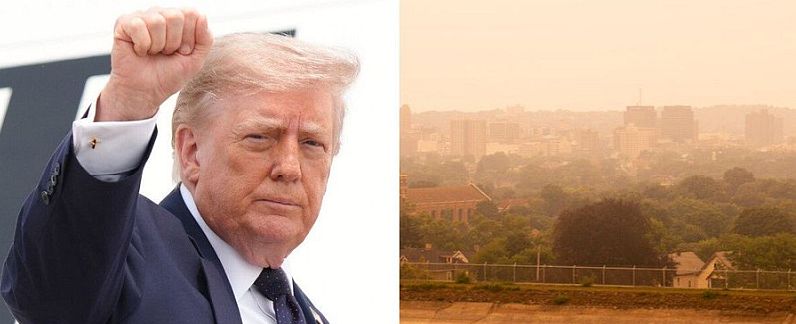
As hundreds of wildfires continue to rage across Canada, a new political dispute has erupted between Ottawa and Washington after Donald Trump threatened to impose additional tariffs on Canadian goods, accusing Canada of allowing wildfire smoke to pollute American skies.
According to the Canadian Wildland Fire Information System, roughly 955 active wildfires were burning across Canada during the July 17–18 reporting period, with the majority considered out of control. The most severe fires are concentrated in northwestern Ontario, although significant fires are also burning in British Columbia and other regions. Together, the fires have already scorched nearly three million hectares (about 7.4 million acres) of land this wildfire season.
Experts say the current fire crisis has been fueled by an unusually hot and dry start to the summer, below-average rainfall across northern Ontario, and numerous lightning strikes that ignited remote forests. Scientists also point to climate change as a major factor creating hotter, drier conditions that allow fires to spread more rapidly. While improved forest management can reduce fire risks near populated areas, researchers note that fires burning across Canada’s vast boreal forests cannot simply be prevented through brush clearing or prescribed burns alone.
The human toll has been severe. Entire First Nations communities in northern Ontario have been evacuated, including the Namaygoosisagagun First Nation, where local leaders said much of the community was destroyed by flames. Provincial officials report that multiple communities have been forced to flee as firefighters, helicopters, and water bombers battle blazes across remote wilderness.
Meanwhile, smoke from the fires has drifted hundreds of miles into the United States, triggering hazardous air quality alerts from Minnesota and Michigan through Illinois, Ohio, Pennsylvania, New York, Washington, D.C., and parts of New England. Thick haze has obscured skylines, forced outdoor events to be canceled, disrupted flights, closed beaches, and prompted health officials to urge millions of residents to remain indoors or wear protective masks.
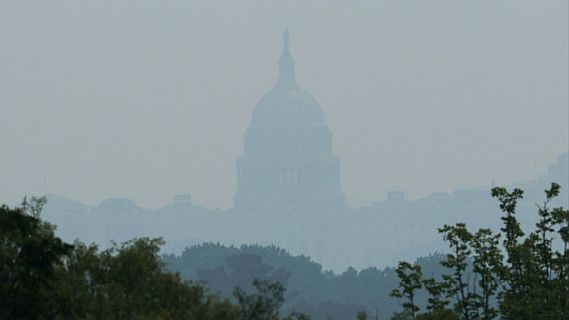
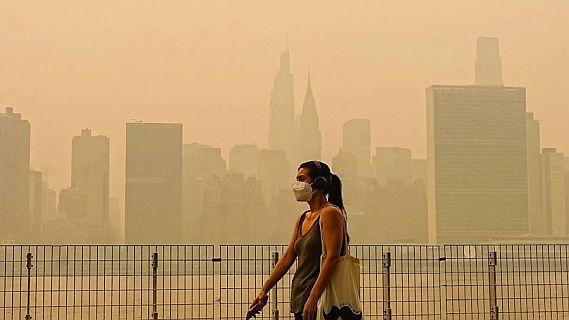
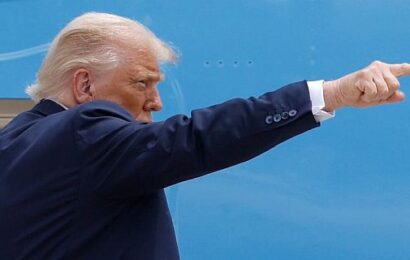
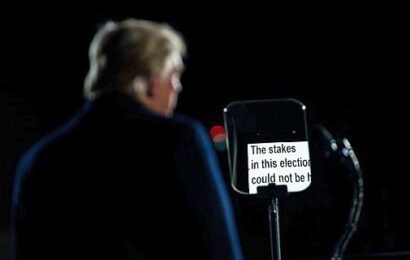
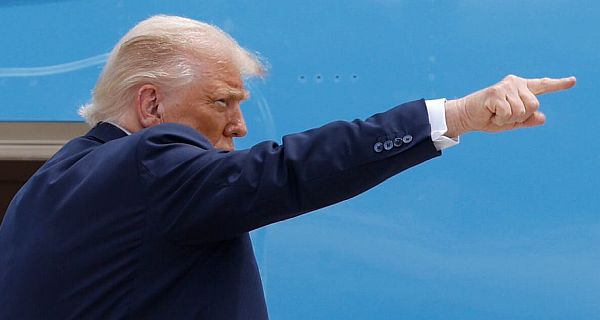
Trump blamed Canada directly for the smoke, writing on Truth Social that the United States was being “unnecessarily invaded by filthy, polluted, and unhealthy air.” He accused Canada of “willful negligence,” claiming it had failed to properly maintain its forests and remove brush, and said the economic cost of the pollution should be added to tariffs already imposed on Canadian imports. Trump also announced he intended to speak with Canadian Prime Minister Mark Carney to demand an explanation and warned that additional trade penalties could follow.
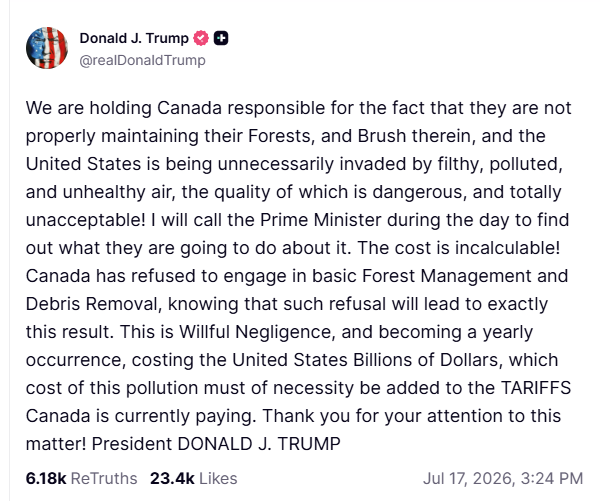
(Image credit: Truth Social: https://truthsocial.com/@realDonaldTrump/posts/116936952365066409)
~
Several Republican lawmakers echoed Trump’s criticism, arguing that Canada has failed to adequately invest in forest management and wildfire prevention. Some also suggested stronger U.S. action if Canadian authorities do not better control future fires.
Canadian officials strongly rejected those accusations.
Prime Minister Mark Carney argued that climate change is a shared responsibility affecting both countries and emphasized that wildfire smoke ignores international borders. Canada’s Minister of Emergency Management, Eleanor Olszewski, highlighted that Canada has invested approximately C$12 billion (12 billion Canadian dollars) in forest sustainability and wildfire prevention since 2020 and noted that the two countries have decades of reciprocal agreements for sharing firefighters and emergency assistance during major disasters.
Ontario Premier Doug Ford was even more direct, criticizing American politicians for “complaining instead of helping.” Ford reminded U.S. leaders that Canada has repeatedly sent firefighters, emergency crews, electrical workers, and aircraft to assist Americans during California wildfires and major hurricanes. He urged the United States to continue that tradition of mutual aid rather than escalating political tensions.
Several Democratic leaders also expressed support for continued cross-border cooperation. Massachusetts Governor Maura Healey offered firefighters and emergency assistance to Ontario, while Minnesota Governor Tim Walz worked with Canadian officials during rescue operations involving stranded campers near active fire zones. Canadian officials praised those offers as examples of the longstanding partnership between the neighboring countries.
Scientists likewise disputed claims that Canada alone is responsible for the smoke affecting the United States, noting that prevailing winds routinely carry wildfire smoke across international borders in both directions. In previous wildfire seasons, smoke from major U.S. fires has similarly affected Canadian communities.
Looking ahead, forecasters expect periods of rainfall to provide temporary relief in parts of eastern Canada and the northeastern United States, potentially improving air quality in the coming days. However, with hundreds of fires still burning out of control and much of Canada’s fire season continuing through the summer, emergency officials warn that smoke events could persist for weeks.
Diplomatically, attention now turns to the expected conversation between Trump and Canada’s Prime Minister Carney, as both governments face growing pressure to balance environmental cooperation with an increasingly tense trade relationship already strained by existing tariffs.
Video:
~
(Sources: BBC, Business Inside, Newsweek, CBC)
Posted by Richard Webster, Ace News Today
Follow Richard on Facebook, Twitter & Instagram