






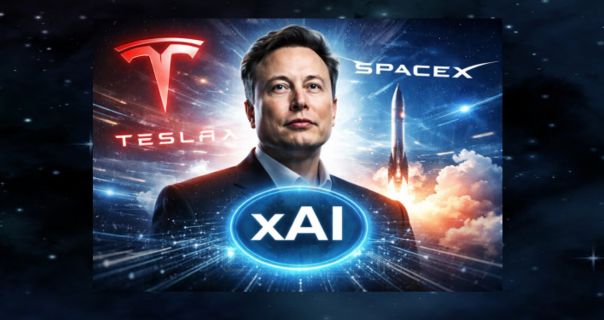
Elon Musk merges SpaceX and xAI in surprise alliance with aim of moving AI data centers to space
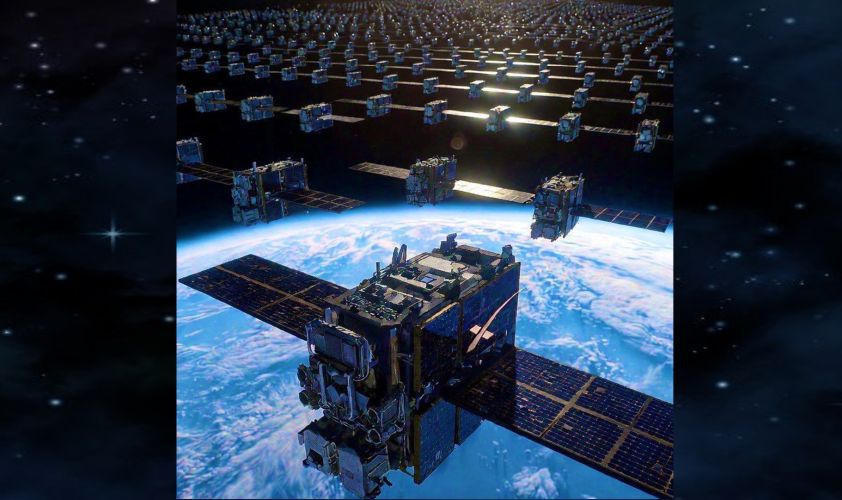
In a surprise announcement that initially left Wall Street analysts scrambling, billionaire Elon Musk revealed the merger of SpaceX, his leading private space exploration company, with xAI, the artificial intelligence startup he founded. According to The New York Times, the merger, which has stunned both investors and industry leaders alike, sets the stage for a unique vision: moving AI data centers into space – where they can take advantage of limitless solar power and bypass Earth’s regulatory restrictions.
Musk has long been known for his ambitious projects, but this move marks a significant leap in both the space and AI industries. Reportedly, the new venture aims to position SpaceX’s extensive satellite network and rocket launch capabilities alongside xAI’s advanced AI models. The ultimate goal? To create AI-powered data centers in low Earth orbit, where they can draw power directly from solar energy and sidestep the constraints of terrestrial infrastructure.
“We’ve always known that space holds tremendous potential for energy and data processing,” Musk stated during a press conference. “The merger of SpaceX and xAI will revolutionize the way we think about both AI and space exploration. By using solar power and moving beyond earthly regulations, we can truly unlock the next frontier of innovation.”
For years, SpaceX has been working on its Starlink network, a constellation of satellites that provides global broadband Internet coverage. Now, the company plans to expand Starlink’s capabilities to house AI data centers in orbit. This could potentially speed up computational power, making AI models significantly more efficient, while also solving the energy consumption challenges that plague data centers on Earth.
Why build those data centers in space?
Musk’s rationale, according to CNN, seems to be driven by what he calls “insurmountable power bottlenecks” on Earth, adding that,”It’s Always Sunny in Space.” His primary argument for moving AI into orbit centers on energy efficiency and the physical constraints on Earth:
- Superior Solar Power: Musk notes that any given solar panel can generate about five times more power in space than on the ground due to the lack of an atmosphere, clouds, and day-night cycles.
- Bypassing the Grid: He claims the “utility industry is a very slow industry” and that terrestrial power grids cannot keep pace with the exponential growth of AI.
- Infinite Scaling: Musk stated that “space is called ‘space’ for a reason,” referring to the vast physical room available for infrastructure without competing for land or water.
The recent and unexpected merger between SpaceX and xAI initially raised eyebrows among investors with many speculating that both companies would experience a drop in their shares. “The move is incredibly speculative,” said Catherine O’Neil, a senior analyst at Wall Street firm Everbright Financial. “It’s one thing to launch rockets, but building AI data centers in space? That’s uncharted territory.”
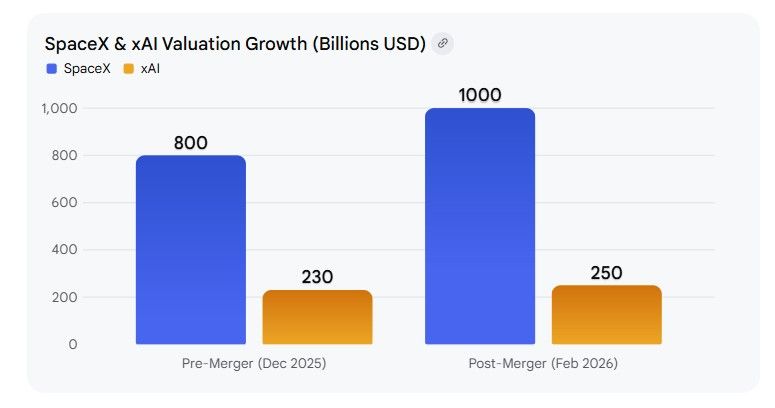
Interestingly though and according to Reuters, the recent merger between SpaceX and xAI, finalized on January 31, 2026, did not cause a drop in valuation; instead, it established a record-setting combined private valuation of $1.25 trillion. While the deal effectively diluted existing SpaceX shareholders by issuing $250 billion in new shares to acquire xAI, the “paper” price of SpaceX shares has remained stable or increased in secondary markets as the company prepares for a highly anticipated IPO later in 2026.
“SpaceX and xAI combine…Tesla next? In our view there is a growing chance that Tesla will eventually be merged in some form into SpaceX/xAI over time. The view is this growing AI ecosystem will focus on Space and Earth together…..and Musk will look to combine forces,” Dan Ives, Global Head of Tech Research at Wedbush, posted on X earlier this week. ~ Trading View
In an interview with podcaster Dwarkesh Patel and billionaire entrepreneur and co-founder/president of fintech giant Stripe, John Collison, Musk forecasted orbital data centers dominating AI computing within 36 months, powered by SpaceX Starship launches delivering gigawatts of solar energy five times stronger than on Earth.
As the finer points of the merger evolve, further details on timelines, investment, and partnerships are expected to be revealed in upcoming SpaceX press releases. In the meantime, experts are watching closely as Musk continues to blur the lines between technology, space, and business. For more on this historic venture, see the video accompanying this article
~
(Additional sources: TechCrunch, Bloomberg)
Posted by Richard Webster, Ace News Today
Follow Richard on Facebook, Twitter & Instagram