






NASA unveils three-phase plan for permanent Moon Base near Lunar South Pole

(NASA unveils new Moon base missions ahead of Artemis astronaut return)
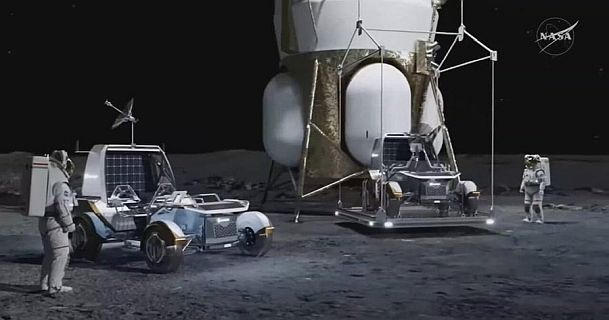
(May 27, 2026) NASA has revealed sweeping new details about its ambitious plan to build humanity’s first permanent moon base, outlining a three-phase strategy that could place astronauts in semi-permanent lunar habitats by the early 2030s. And Phase I has already begun.
The announcement, made yesterday, comes as NASA accelerates its Artemis program following April’s successful Artemis II lunar flyaround mission. The agency said the Moon Base will be constructed near the moon’s south pole through a gradual buildout involving robotic missions, cargo deliveries, power systems and eventually long-term human habitation.
NASA Administrator Jared Isaacman described the effort as the next major step in America’s return to deep space exploration, emphasizing that the harsh lunar environment requires a careful, phased approach rather than “a glass dome moon base” built overnight.
Under Phase One, running through 2029, NASA plans 25 launches and 21 lunar landings to test technologies and prepare the surface for astronauts. The agency awarded contracts to several private aerospace companies, including Jeff Bezos-backed Blue Origin, Firefly Aerospace, Astrolab and Lunar Outpost.
Blue Origin will deliver lunar landers and transport rover vehicles to the moon, while Firefly Aerospace is expected to launch hopping drones designed to scout terrain, map resources and establish the perimeter of a future settlement site.
NASA said the first Artemis astronauts could land near the lunar south pole as early as 2028. By Phase Two, beginning around 2029, the agency plans to assemble semi-permanent infrastructure, including solar and nuclear-powered energy systems. Phase Three, extending into the 2030s, aims to establish continuous crew rotations and sustained human activity on the lunar surface.
A Step-by-Step Approach
Moon Base Development
NASA will establish the Moon Base in the lunar South Pole region through a phased, iterative approach that builds capability over time. By starting with near-term technology demonstrations, robotic missions, and early experiments, NASA and its partners can test systems, learn quickly, and steadily mature the capabilities required for continuous human presence on the Moon.
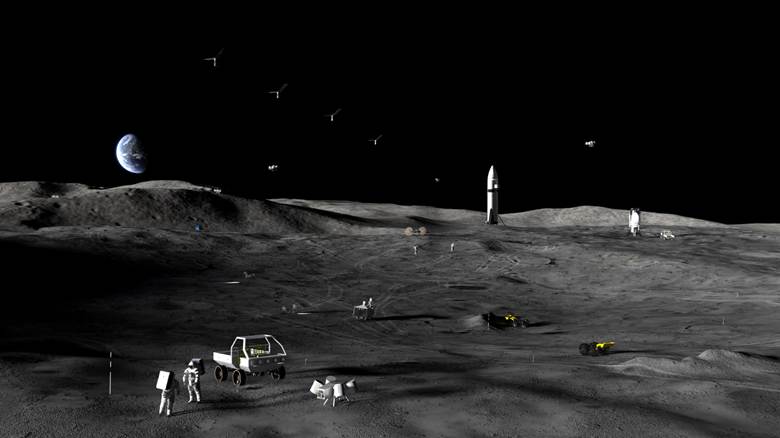
Phase One (Now–2029) – Learn, Test, Build
NASA will begin with a rapid series of robotic missions to scout the lunar South Pole region, test technologies, and prepare for surface operations. Scroll below to learn more about some of the key missions, assets, and technology demonstrations planned for Phase One of Moon Base development.
~
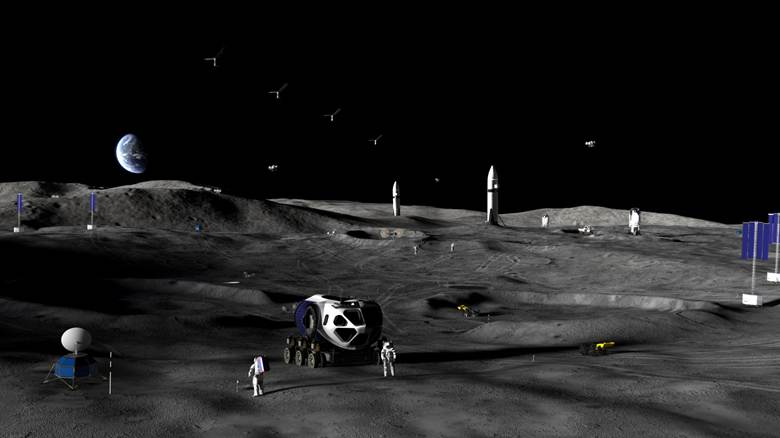
Phase Two (2029-2032) – Early Habitation
By 2029, NASA will transition to assembling semi-permanent infrastructure and initiating early habitation and logistics operations. Scroll below to learn more about some of the key assets, demonstrations, and activities planned for Phase Two of Moon Base development.
~
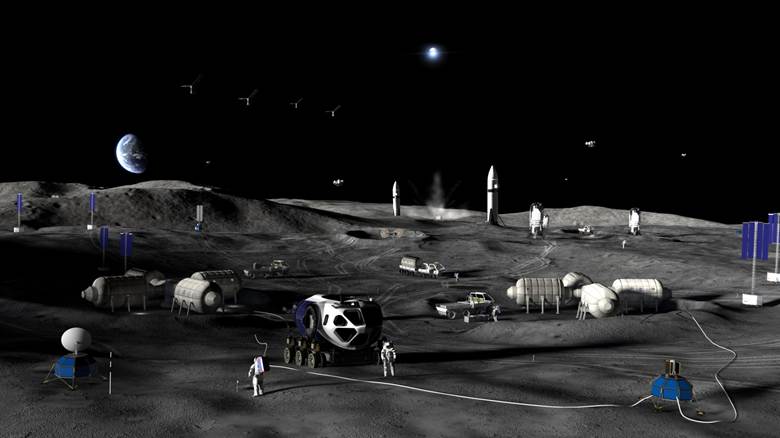
Phase Three (2032-Beyond) – Sustained Human Presence
This phase will scale operations to achieve a sustained presence, with routine crew rotations and continuous surface activity. This is when living and working on the Moon becomes a reality. Scroll below to learn more about some of the key demonstrations and activities planned for Phase Three of Moon Base development.
~
The moon base is intended to support scientific research, develop a future lunar economy and help prepare astronauts for eventual missions to Mars. The announcement also underscores growing competition with China, which is pursuing its own plans to land astronauts on the moon before 2030. Some experts remain skeptical of NASA’s timeline, citing ongoing delays with SpaceX’s Starship Human Landing System, which is expected to transport astronauts to the lunar surface.
Despite those challenges, NASA officials say the agency is committed to creating a lasting presence on the moon.
“We are really just getting started,” Isaacman said.
Video:
~
(Sources: NASA, AP News, ABC News, BCC)
Posted by Richard Webster, Ace News Today
Follow Richard on Facebook, Twitter & Instagram