





New NASA mission: ‘Space weather – and how it’s impacted by Earth’s atmosphere’
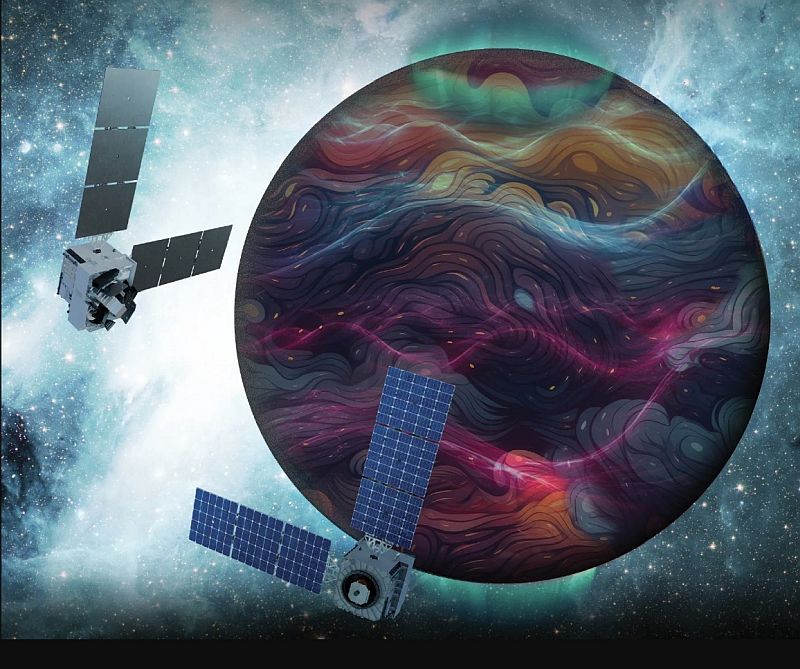
(Artist’s rendition of the DAPHNE (Dynamic Atmosphere-Ionosphere Explorer) mission concept. The coloring represents auroras and atmospheric waves in Earth’s atmosphere. Image credit: Laboratory for Atmospheric and Space Physics/Mary Tostanoski)
NASA has selected an ambitious new mission designed to better understand how Earth’s atmosphere influences space weather, a critical factor that can affect GPS navigation, communications systems, satellites, and even astronauts traveling beyond Earth’s protective magnetic shield.
The mission, known as DAPHNE (Dynamic Atmosphere-Ionosphere Explorer), has officially advanced into the next stage of development and planning. The project will deploy two identical satellites to investigate how changes in Earth’s lower atmosphere ripple upward into the planet’s upper atmospheric layers, where space weather events take shape.
Scientists say the mission could significantly improve forecasting capabilities for disturbances that impact technologies relied upon daily around the world.
“By providing new insights into Earth’s atmosphere, we can better predict and prepare for impacts in our daily lives on Earth and in space,” said Nicky Fox, associate administrator for NASA’s Science Mission Directorate.
The twin spacecraft will collect coordinated measurements of winds, temperature, and atmospheric composition within the thermosphere and ionosphere – a dynamic region where Earth’s atmosphere transitions into the charged particles of space. Researchers hope the data will reveal how atmospheric activity closer to Earth contributes to conditions higher above the planet.
The information gathered by DAPHNE is expected to strengthen models used to predict space weather events, helping protect critical infrastructure and future exploration missions. The research could prove especially valuable as NASA prepares for long-duration journeys to the Moon, Mars, and beyond, where astronauts are more vulnerable to solar activity.
The mission is led by Aimee Merkel of the University of Colorado Boulder’s Laboratory for Atmospheric and Space Physics and is managed through NASA’s Solar Terrestrial Probes Program at the agency’s Goddard Space Flight Center in Maryland.
DAPHNE is scheduled to undergo a formal confirmation review in 2027. If approved, the mission’s development cost—excluding launch expenses—is expected to remain below $250 million, with a launch targeted for 2029 or later.
NASA officials view the mission as another key step in building a more space-weather-ready future, improving both scientific understanding and the resilience of technologies that support modern life.
Video:
~
(Source: NASA)
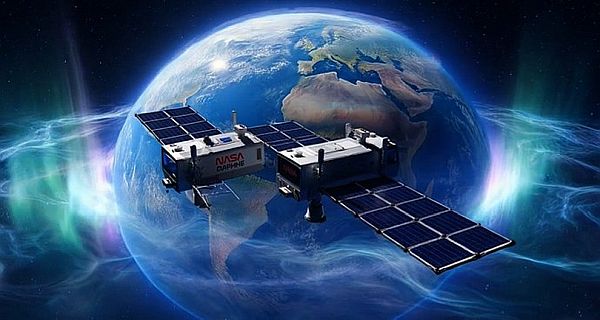
(Cover photo: “NASA JUST APPROVED TWIN SATELLITES TO STUDY HOW EARTH’S WEATHER REACHES SPACE” – Image credit: TheNewPhysics)
Posted by Richard Webster, Ace News Today
Follow Richard on Facebook, Twitter & Instagram